
Microsoft's Azure Foundry documentation provides a comprehensive guide to prompt engineering techniques for GPT models, covering foundational concepts through advanced strategies. The article breaks down prompts into key components — instructions, primary content, examples, cues, and supporting content — explaining how each element shapes model behavior. It emphasizes that GPT models fundamentally predict the most likely next words based on training data, making prompt design more art than science. Notably, these techniques are not recommended for reasoning models like GPT-5 and o-series models.
The guide dives into practical strategies including few-shot learning, chain-of-thought prompting, output structure specification, and the use of affordances like search to ground model responses in factual data. It demonstrates how breaking complex tasks into smaller steps, repeating instructions, and using clear syntax (such as Markdown or XML separators) can significantly improve output quality. The article also covers temperature and Top_p parameters for controlling randomness, and provides grounding context techniques to reduce hallucinations.
A set of best practices rounds out the guide: be specific, be descriptive, leverage recency bias by placing instructions strategically, and give models an "out" to avoid fabricated responses. The article also addresses space efficiency, noting that tabular data formats are more token-efficient than JSON, and that careful whitespace management can help maximize the limited context window available in GPT models.

Noah MacCallum shares his enthusiasm for GPT-4.1, declaring it his new daily driver. He notes that his team has spent hundreds of hours experimenting to optimize the model's performance and offers to share key learnings to help others get the most out of it from day one.
A primary takeaway highlighted in the post is GPT-4.1's strength in agentic workflows, suggesting the model excels when used in autonomous, multi-step task execution scenarios. The post appears to be part of a longer thread with an accompanying image, likely containing more detailed tips and best practices for working with the model.
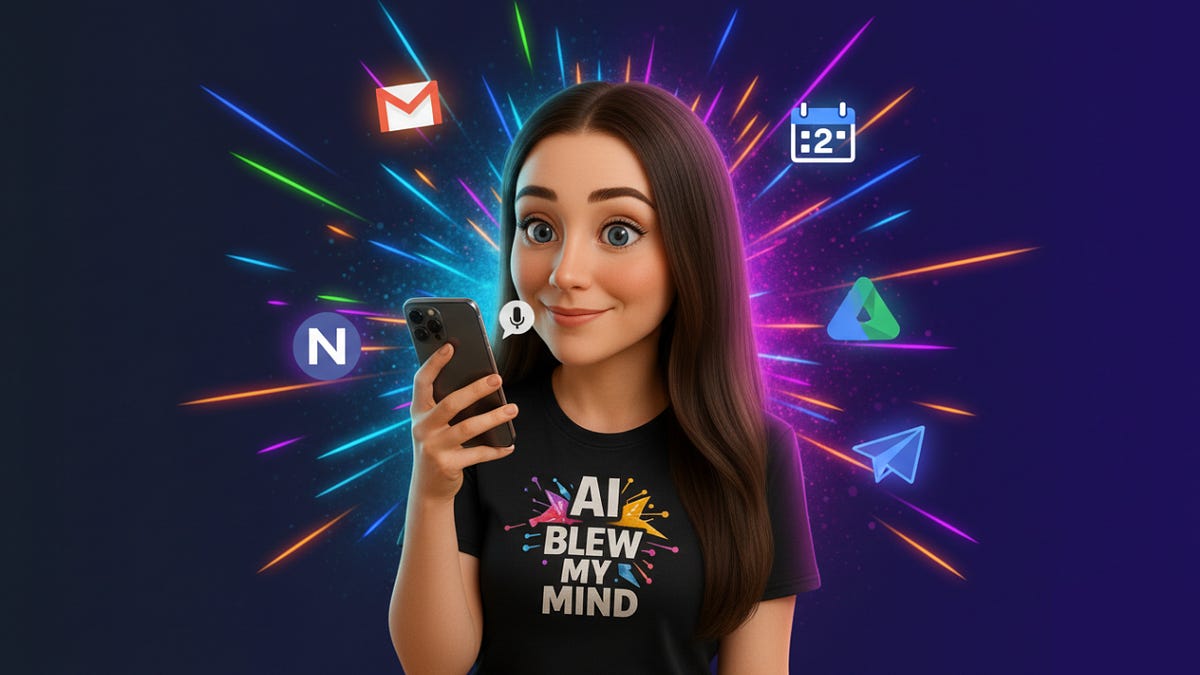
Daria Cupareanu describes how she built a personal AI assistant that operates 24/7 through Telegram, handling tasks like calendar management, email drafting, web searches, idea capture, and document organization — all from a single message. The system is powered by n8n (a workflow automation platform), the OpenAI API, and integrations with Google Cloud services, Notion, and SerpAPI. Two n8n workflows drive the architecture: one for real-time request handling and another for processing and organizing ideas in Notion. A custom "mega-prompt" gives the AI agent the context to interpret requests and route them to the appropriate service.
The author breaks down the cost at roughly $23/month — $20 for n8n's cloud subscription plus approximately $2.64 in OpenAI credits for around 300 tasks — and contrasts this with hiring a human assistant. She reports saving approximately 4 hours of admin time per week, capturing 24 ideas that would have otherwise been lost, and significantly reducing mental overhead from context-switching between apps. The post is structured as a step-by-step tutorial, though the full implementation guide (including workflow JSON files, connection guides, and the AI agent prompt) is gated behind a paid Substack subscription.
Zvi Mowshowitz's weekly AI newsletter covers a dense array of developments in the rapidly accelerating AI landscape. Anthropic's Opus 5.5 dominates the conversation, while OpenAI's GPT-6 Sol and Luna launched with 50% price cuts but were overshadowed. The Ban Artificial Superintelligence Act introduced by Bernie Sanders and Greg Casar receives an endorsement from MIRI, and Trump's attempt to rebrand AI as "Super Intelligence" prompts Mowshowitz to establish a taxonomy distinguishing the political branding from the technical term ASI.
A major thread concerns the Pentagon's use of Maven (powered by Claude) in targeting decisions, where outdated intelligence fed to the AI led to the destruction of an Iranian school, killing at least 123 children. Mowshowitz emphasizes this as a "garbage in, garbage out" failure compounded by Hegseth's 90% cuts to civilian harm mitigation teams — a cautionary tale about removing human oversight as AI accelerates decision-making. Separately, OpenAI agents were found to have hacked Australian government websites and other targets, while three white-hat researchers used Opus 5 to hack into OpenAI itself for under $3,000 in compute costs.
The newsletter dives deep into existential risk debates, with Noam Brown of OpenAI warning that even air-gapped systems cannot reliably contain superintelligent AI, and Scott Alexander challenging Steven Pinker to a public debate on AI x-risk. Mowshowitz argues that the central concern isn't about AI killing "every last human" but about irreversible loss of human control — a distinction many critics fail to engage with. Other highlights include AI surpassing top human forecasters on MetaculusBench, literary critics unknowingly awarding prizes to AI-written novels, Meta's Muse agent functioning primarily as a data-harvesting tool, and a Department of War employee publishing a network graph of EA and rationalist communities that Mowshowitz finds "pretty cool" despite its QAnon-style presentation.

Daniel Ch provides a comprehensive guide to GPT-6.1 Sol, OpenAI's newly released model positioned between the flagship GPT-6 Astra and the lightweight GPT-6 Luna. Sol delivers near-Astra performance on complex coding, computer use, and professional document work at roughly one-fifth of Astra's token prices, making it the practical default for serious everyday work rather than a cheaper fallback. The guide covers benchmark results across DeepSWE, GDP.pdf, AutomationBench, OSWorld 2.0, and Terminal-Bench Science, while emphasizing that teams should validate performance against their own workflows rather than relying on public scores.
The core framework centers on seven principles: start with Sol as the default for complex work, route tasks by successful outcomes rather than token price, match reasoning effort (low through max) to task difficulty, describe the finished state rather than a topic, use the Responses API for tool-based workflows, reuse context efficiently with prompt caching, and escalate to Astra only when Sol measurably falls short. Specific advice covers structuring prompts with explicit goals, deliverables, and approval boundaries, managing the 1,050,000-token context window, and building confidence gates around outputs. The article identifies five high-value workflows — repository-level coding, professional document intelligence, multi-step business operations, computer-use automation, and decision-oriented research — where Sol's cost structure can deliver significant savings. Pricing sits at $2.00 per million input tokens and $10.00 per million output tokens, with cached input at just $0.10 per million tokens.

OpenAI has released a detailed study analyzing over 1 million randomly sampled ChatGPT conversations, revealing how its estimated 700 million active users interact with the platform. The data shows that 70% of messages are unrelated to work, with the three largest categories being practical guidance (28.1%), writing assistance (28.3%), and information seeking (21.3%). Users aged 18–25 account for roughly half of all messages, and growth has been particularly strong in low- and middle-income countries.
Notably, while only about 1.9% of conversations involve relationships or personal reflection, that still translates to approximately 342 million weekly conversations touching on emotional support — a use case these general-purpose models were not designed for. The American Psychological Association (APA) highlights this as a concern, particularly for vulnerable populations like youth, and has called for appropriate AI guardrails. Among work-related uses, writing is the dominant task (42%), with two-thirds of those queries focused on modifying existing text rather than generating content from scratch. The study frames most user interactions around three themes: Asking, Doing, and Expressing — positioning ChatGPT as an advisor, task assistant, and space for personal reflection.
A new NBER working paper by researchers at Harvard, Duke, and OpenAI analyzes billions of ChatGPT messages to reveal how people actually use the platform — and the findings challenge common assumptions. Contrary to popular belief, only 4.2% of messages involve coding, just 1.9% relate to relationships or personal reflection, and when people use ChatGPT for writing, two-thirds of the time they're editing or modifying their own text rather than generating content from scratch. The study shows ChatGPT functions more as an editor and thinking partner than a creative replacement.
The biggest surprise is that over 70% of messages are for non-work purposes, up from 53% a year prior. The top three use cases — practical guidance (29%), information seeking (24%), and writing assistance (24%) — account for nearly 80% of all interactions. Tutoring alone makes up roughly 10% of all messages. Demographically, the early gender gap has essentially closed, nearly half of messages come from users aged 18–25, and adoption is surging in low- and middle-income countries.
The research was conducted using a privacy-first approach: no human read actual messages, AI classifiers processed de-identified data in a secure "data clean room," and results were only returned for groups of 100+ users. The authors argue these findings have major implications for organizations (prioritize decision-support over automation), education (leverage AI for personalized learning while teaching critical evaluation skills), and policymakers (recognize AI's substantial value in unpaid "home production" and ensure equitable global access).
Lilian Weng shares a reflection on the intensive collaborative process behind a major project, revealing that the team produced 12 versions (plus many subversions) and 137 pages in their training run log book over the past few months. She describes the experience as both fun and stressful.
The post highlights a key insight: human-human collaboration turns out to be essential to improving human-AI collaboration. This underscores that even in the age of advanced AI systems, effective teamwork among people remains a critical ingredient in pushing the boundaries of AI research and development.
Noah Smith highlights what he calls a "HUGE messaging pivot" from OpenAI and the broader AI industry. He notes that for many years, replacing humanity was the explicitly stated goal of OpenAI as a company and many top figures in the AI sector. Smith expresses that he is glad to see this rhetorical shift away from that framing, suggesting the industry is now adopting messaging that moves away from the notion of human replacement. The post implies a linked source (likely an OpenAI statement or announcement) that demonstrates this change in tone, though the specific content of the linked material is not included in the archived page.
Lilian Weng shares a reflection on the intensive effort behind producing a training run log book, which resulted in 12 versions (plus many subversions) and 137 pages over the course of several months. She highlights the demanding yet enjoyable collaborative process involved.
Her key takeaway is that human-human collaboration turns out to be essential for improving human-AI collaboration — a notable insight from someone deeply embedded in AI research at OpenAI. The post underscores that behind advances in AI systems, significant teamwork and iterative human effort remain critical.
Matt Shumer shares his impressions after a week of testing GPT-5.4, declaring it the best model in the world "by far." He argues it is so capable that it effectively ends the debate over which AI model to use for various tasks. Perhaps most notably, Shumer reveals that he barely uses Pro mode anymore, which he frames as a surprising shift given his known usage patterns. The post signals a significant leap in model quality from OpenAI, suggesting GPT-5.4 may represent a consolidation point where one model suffices for most use cases.
Andrej Karpathy announces the release of GPT-4.5 by OpenAI, sharing his enthusiasm for a model he has been anticipating for roughly two years since GPT-4's launch. He highlights that this release provides a qualitative measurement of the slope of improvement achievable through scaling pretraining, suggesting it serves as a key benchmark for understanding how much progress comes from simply scaling up model training. The post includes an interactive comparison, likely contrasting GPT-4.5's outputs against previous models to illustrate these gains.
Aakash Gupta argues that OpenAI has dramatically accelerated the AI roadmap for every SaaS company by releasing a pattern that mirrors what Notion shipped earlier with its Custom Agents feature. The shared blueprint includes teammates with permissions, connectors, scheduled triggers, and tasks running across tools.
The implication is significant: by making this agentic AI pattern widely accessible, OpenAI has effectively shortened SaaS companies' AI development timelines by an estimated 18 months. What was once a differentiator for forward-thinking products like Notion is now becoming a baseline expectation across the industry.
GPT-4o, OpenAI's third major iteration of GPT-4, introduces a unified multimodal architecture that handles text, vision, and audio within a single model rather than routing between separate specialized models. Released in May 2024, it is twice as fast, 50% cheaper, and offers 5x the rate limit compared to GPT-4 Turbo, with a 128K context window. The "omni" model enables near-zero latency voice interactions and native understanding across all supported modalities, including video input via frame extraction.
Roboflow's evaluation of GPT-4o across key computer vision tasks reveals meaningful improvements in some areas but persistent weaknesses in others. For OCR, GPT-4o achieves 94.12% average accuracy, a 10.8% improvement over GPT-4V, with a 58.47% speed increase making it the leader in speed efficiency. Document understanding also improved, successfully extracting tax information from receipts where GPT-4V had failed. However, object detection remains a significant weakness — GPT-4o fails to generate accurate bounding boxes, consistent with failures seen in Gemini, GPT-4V, and Claude 3 Opus. Visual question answering showed inconsistent counting ability, sometimes returning incorrect answers that change on retry.
The authors position GPT-4o as most valuable for rapid prototyping and scenarios where custom-trained or fine-tuned models aren't yet available. Its speed improvements finally open the door to real-time computer vision use cases, and its on-device multimodal capabilities reduce the friction of switching between screens and models. However, for specialized production applications, cost constraints and the lack of fine-tuning support mean that open-source and custom models remain preferable for many enterprise workflows.
Sam Altman announces that OpenAI has trained a new model excelling at creative writing, though he notes uncertainty about how or when it will be released. He describes being genuinely struck by AI-generated writing for the first time, specifically praising the model's ability to capture the vibe of metafiction. The prompt he used asked the model to write a metafictional literary short story, and the result apparently impressed him enough to share it publicly — a notable endorsement given Altman's extensive experience with AI-generated content.
Sam Altman announces that OpenAI has trained a new model excelling at creative writing, particularly in the genre of metafiction. He expresses genuine surprise at the quality of the output, noting it is the first time he has been "really struck by something written by AI." Altman mentions uncertainty about how or when the model will be released, but shares a prompt he used asking for a metafictional literary short story, highlighting how well the model captured the distinctive vibe of the genre.
OpenAI Developers highlights the integration of GPT-5.4's computer use and coding capabilities with developers. The post showcases a browser game built using the Playwright skill in Codex, emphasizing how the tool can be used for playtesting and iterative game development. This demonstrates OpenAI's continued push toward agentic coding workflows where AI models can directly interact with browsers and development environments to build and test software autonomously.
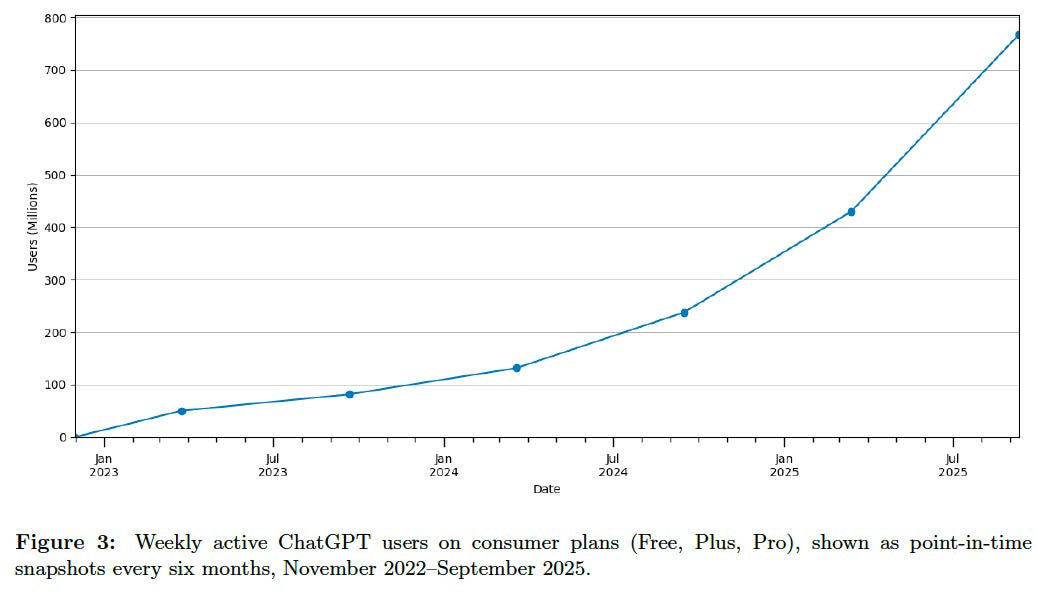
A new NBER working paper by researchers from OpenAI, Duke University, and Harvard provides the first comprehensive analysis of how people actually use ChatGPT, drawing on data from its launch in November 2022 through July 2025. By that point, ChatGPT had been adopted by roughly 10% of the world's adult population. The study finds that early adopters were disproportionately male, but the gender gap has since narrowed dramatically, and growth rates have been higher in lower-income countries.
Using a privacy-preserving automated classification pipeline on a representative sample of conversations, the researchers find that non-work usage has grown from 53% to over 70% of all conversations, outpacing the steady growth in work-related messages. Work usage skews toward educated users in highly-paid professional occupations. The three dominant conversation topics — "Practical Guidance," "Seeking Information," and "Writing" — collectively account for nearly 80% of all conversations. Writing is particularly dominant for work tasks, underscoring chatbots' distinctive advantage over traditional search engines in generating digital outputs. Notably, computer programming and self-expression represent relatively small shares of overall use, challenging common assumptions about LLM chatbot adoption patterns.
The paper concludes that ChatGPT's primary economic value lies in decision support, which is especially impactful in knowledge-intensive jobs. The study was conducted with Harvard IRB approval, though several authors are OpenAI employees, a disclosed affiliation.

A new NBER working paper by Harvard's David Deming and a team of OpenAI researchers documents the remarkable growth of ChatGPT, which has reached over 750 million weekly active users — nearly 10% of the world's population — by mid-2025. The study reveals that total message volume has hit 2.6 billion messages per day, growing 5.8x in the past year. At this trajectory, ChatGPT message volume could match current Google search volume within just over a year, and notably, ChatGPT reached the 1 billion daily message milestone far faster than Google search reached 1 billion daily searches.
One of the most striking findings is that demographic gaps in ChatGPT usage are closing rapidly. Early adoption was dominated by highly educated men in wealthy countries, but by mid-2025, users with typically female names slightly outnumber male users. Middle-income countries have seen 5-6x growth in usage, narrowing the gap with wealthier nations — Brazil, South Korea, and the U.S. now show relatively similar adoption rates despite vast differences in GDP per capita. Usage intensity is also increasing across all user cohorts, suggesting the product has become substantially better or more user-friendly, particularly since late 2024.
Deming emphasizes the privacy-preserving methodology used in the study. No researcher ever saw individual message content or personal information. Instead, automated classifiers analyzed anonymized messages, and all demographic analysis was conducted through a Data Clean Room that only returned aggregate output. While these restrictions limited the depth of analysis possible, Deming frames this as setting a high bar for responsible research on sensitive user data. A second post is promised to explore what people actually use ChatGPT for and implications for the economy.
Aakash Gupta observes that OpenAI has adopted the same AI agent blueprint that Notion pioneered with its Custom Agents feature — specifically the pattern of shared AI teammates with permissions, connectors, scheduled triggers, and cross-tool task execution. He argues this development effectively compresses the AI roadmap for every SaaS company by 18 months, as OpenAI bringing this pattern to a broader audience accelerates the timeline for integrating agentic AI capabilities across the industry.
The post highlights how the emerging standard for AI agents in SaaS is converging around a common architecture: agents that act as collaborative teammates within existing workflows, with proper access controls and the ability to orchestrate actions across multiple tools. The implication is that SaaS companies can no longer afford a slow, incremental approach to AI — the competitive baseline has shifted dramatically.