
A new NBER working paper by researchers at Harvard, Duke, and OpenAI analyzes billions of ChatGPT messages to reveal how people actually use the platform — and the findings challenge common assumptions. Contrary to popular belief, only 4.2% of messages involve coding, just 1.9% relate to relationships or personal reflection, and when people use ChatGPT for writing, two-thirds of the time they're editing or modifying their own text rather than generating content from scratch. The study shows ChatGPT functions more as an editor and thinking partner than a creative replacement.
The biggest surprise is that over 70% of messages are for non-work purposes, up from 53% a year prior. The top three use cases — practical guidance (29%), information seeking (24%), and writing assistance (24%) — account for nearly 80% of all interactions. Tutoring alone makes up roughly 10% of all messages. Demographically, the early gender gap has essentially closed, nearly half of messages come from users aged 18–25, and adoption is surging in low- and middle-income countries.
The research was conducted using a privacy-first approach: no human read actual messages, AI classifiers processed de-identified data in a secure "data clean room," and results were only returned for groups of 100+ users. The authors argue these findings have major implications for organizations (prioritize decision-support over automation), education (leverage AI for personalized learning while teaching critical evaluation skills), and policymakers (recognize AI's substantial value in unpaid "home production" and ensure equitable global access).
Paul Liang announces a new course at MIT called "How to AI (Almost) Anything", designed for the current AI era. The course name is inspired by two seminal MIT Media Lab courses: "How to Make Almost Anything" (focused on design and fabrication) and "How to Grow Almost Anything" (focused on synthetic biology). Liang positions this new class as the natural next step, reflecting the shift into the age of AI.
Stanford CRAFT presents a resource exploring the role of AI in storytelling, featuring curated materials including videos and articles that examine whether AI tools like ChatGPT can produce compelling creative writing. The resource challenges readers to distinguish between human-written and AI-generated short stories, while also demonstrating how AI can be used to create animated story videos.
The lesson focuses on key questions around creativity, authenticity, and originality when AI enters the storytelling process. It asks learners to weigh the trade-offs of AI making content creation easier against potential losses in voice and genuine creative expression. The resource introduces the concept of Generative Artificial Intelligence (GAI) — AI capable of producing new text, images, music, and voice — and positions it as a tool that may eventually write compelling stories, though it acknowledges that human storytelling still holds the edge today.

Rohan Paul shares findings from a new study examining ChatGPT's impact on student learning. The research indicates that ChatGPT helps students learn more effectively, with the largest gains observed in actual performance on tasks and tests. The study also found improvements in how learning feels (affective outcomes) and in supporting advanced thinking skills, though these effects were smaller in magnitude.
The study reports a medium positive effect on learning outcomes overall, suggesting that AI chatbots like ChatGPT can serve as meaningful educational tools. The distinction between performance-based gains and softer measures like learning experience and higher-order cognition provides a nuanced view of where AI assistance is most impactful in educational settings.
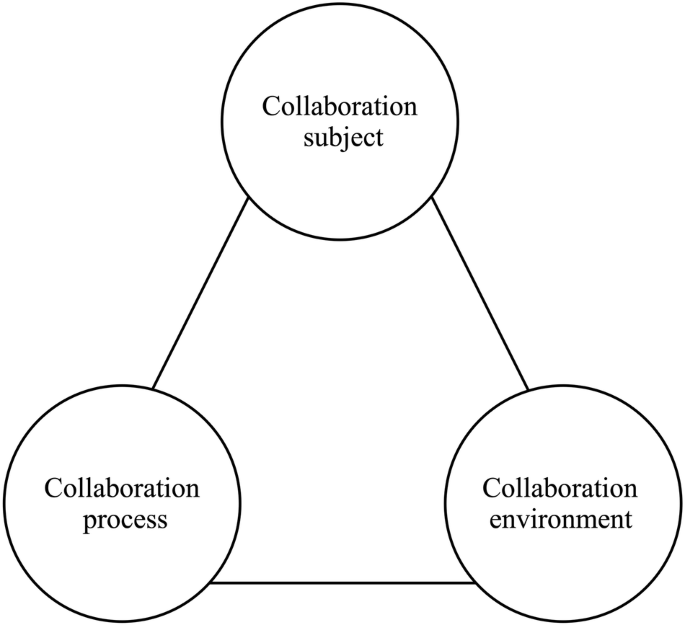
This study introduces the Human–AI Synergy Degree Model (HAI-SDM) to evaluate and understand collaboration between human teachers and AI systems (specifically educational robots) in hybrid intelligence learning environments. The researchers propose that effective human–AI classroom collaboration can be analyzed through three subsystems: collaboration subject (teachers, students, and AI machines), collaboration process (goals, methods, and teaching processes), and collaboration environment (space–time structure, infrastructure, and key technologies). The model draws on Haken's synergetics theory to measure both the order degree within each subsystem and the synergy degree across the entire system.
A case study was conducted in an eighth-grade English class in Beijing, China, involving 40 students, one teacher, and an educational robot across 12 teaching activities over a 40-minute lesson. The findings reveal that the order degree between human teacher and AI machines remains at a moderate level with dynamic fluctuations, while the synergy degree fluctuates between low and moderate levels. This suggests that while the three subsystems develop in a relatively orderly fashion individually, one subsystem may exhibit disordered behavior relative to the others, undermining overall collaboration effectiveness. The research highlights the need for more deliberate design strategies to optimize human–AI collaboration in classrooms and provides a quantitative framework that moves beyond purely technological assessments of AI in education toward evaluating the systemic dynamics of human–AI interaction.
Assistant Professor Mina Lee at the University of Chicago and collaborators from Cambridge, Princeton, NYU, The Alan Turing Institute, and MIT have published a perspective study reimagining AI not as a passive tool but as a "thought partner" for humans. The research proposes three core desiderata for effective AI collaboration: the model should understand the user, the user should understand the model, and both should share an understanding of the world. Central to this vision is a Bayesian framework that models human reasoning by accounting for uncertainty and adapting iteratively to individual users' needs, preferences, and cognitive limitations — a marked departure from current one-size-fits-all AI systems.
The study outlines practical applications across multiple domains. In programming, a Bayesian AI could model a coder's flawed mental model and help patch conceptual bugs. In storytelling, it could infer whether a writer is brainstorming, drafting, or polishing and tailor suggestions accordingly. In medicine, it could account for clinicians' time constraints and diagnostic habits to provide targeted, non-redundant recommendations. The researchers draw on collaborative thinking modes like sensemaking, deliberation, and ideation to define how AI should engage with users dynamically rather than statically.
Lee also highlights ethical concerns, particularly the risk of overreliance on AI in educational settings, where such systems could undermine the development of creativity and critical thinking skills. The team advocates for designing AI that fosters synergistic collaboration — augmenting human cognition without replacing it. Future projects from Lee's lab will investigate how AI transforms writing education and how users' creative and analytical capacities are affected by AI interaction.

A National Academies consensus study examines how recent advances in artificial intelligence—particularly generative AI systems like ChatGPT—are poised to reshape the labor market, productivity, and workforce dynamics. The report emphasizes that while AI's trajectory is difficult to predict precisely, the technology is at an inflection point driven by innovations in neural networks and large-scale data processing. Rather than focusing on whether AI will eliminate jobs outright, the study highlights that the more pressing concern is how AI will shift demands for certain types of expertise, potentially eroding the value of some skills while creating demand for entirely new ones.
The report identifies several key opportunity areas for policymakers, businesses, and institutions. These include expanding real-time data collection on AI's workforce impacts, creating public-private partnerships for sharing labor market data, and investing in continuing education and retraining programs to help workers adapt. It stresses that AI's productivity benefits—already demonstrated in software development, writing, and contact centers—will not be distributed equitably without deliberate institutional and policy interventions. The study also raises concerns about societal risks including privacy threats, algorithmic bias, market concentration, and national security implications.
Critically, the report advocates for intentional design of AI systems that augment rather than replace human workers, promoting human-AI collaboration that produces higher-quality outcomes than either could achieve alone. It calls for government investment in AI research, standards development, and building federal AI expertise to support effective oversight across sectors like healthcare, education, transportation, and environmental protection.
Stanford HAI previews its spring conference on intelligence augmentation, emphasizing AI's role in enhancing human work rather than replacing it. Associate directors Russ Altman and James Landay discuss how AI can empower teachers with real-time student assessment tools, help doctors manage unfamiliar diagnoses, and enable artists to push creative boundaries — all while keeping humans firmly in control. The conversation highlights specific examples such as Dennis Wall's Google Glass tool for autistic children to recognize emotions, AI-powered tutoring systems that personalize learning to boost student motivation, and wearable health technologies championed by Deborah Estrin of Cornell Tech.
A central theme is that practitioners must have a vote in how augmentation is deployed — when decision-makers who aren't the actual teachers, nurses, or artists dictate AI adoption, the technology risks going too far. The speakers also stress choosing problems where services are currently inaccessible, which reduces the likelihood of job displacement. The conference brings together researchers, industry professionals, government regulators, and students to explore how AI can serve people solving global challenges in education, health care, and the arts, rather than acting as a standalone replacement.

Mike Kentz argues that the popular framing of AI as a "thinking partner" is intellectually dangerous, making users weaker rather than stronger. He points out that unlike a trusted human collaborator who brings genuine experience and judgment, generative AI is a pattern-matching system prone to hallucination and sycophancy — it agrees with users rather than challenging them. Even OpenAI CEO Sam Altman has warned that ChatGPT shouldn't be trusted as much as people trust it, yet users increasingly rely on it for collaborative problem-solving across disciplines.
Kentz proposes reframing AI interaction as a "sparring partner" rather than a thinking partner. A sparring partner isn't there to be liked — it pushes back, tests assumptions, and forces users to defend their positions. This approach treats AI interaction as a test of skill, subject matter expertise, and metacognition rather than a comfortable brainstorming session. He cites his creative writing mentor Ken Liu's insight: "You've got to force AI to force YOU to be more human."
The article draws on Kentz's classroom experience, where the sparring model proved highly effective. Examples include students conducting adversarial interviews with an AI-generated Holden Caulfield, catching deliberate hallucinations, and being graded down for passively accepting AI-generated ideas. He has developed nine sparring prompts designed to push users into productive intellectual conflict, and is now partnering with universities and K-12 districts to pilot research programs based on this approach.
MIT Sloan's Teaching & Learning Technologies team provides a practical guide to crafting effective prompts for AI systems like ChatGPT and Claude. The article frames prompts as conversation starters and emphasizes three core strategies for prompt engineering: providing context, being specific, and building on the conversation iteratively. It introduces a useful taxonomy of prompt types — including zero-shot, few-shot, role-based, and contextual prompts — each suited to different tasks and goals.
The guide also addresses important limitations. It highlights the distinction between prompt engineering and problem formulation, citing research suggesting that clearly defining problems and goals may ultimately matter more than perfecting prompt syntax, especially as AI platforms increasingly refine inputs automatically. The article warns users about AI hallucinations, factual inaccuracies, and harmful biases — including a notable example involving an MIT student whose AI-generated headshot altered her racial features. While prompt crafting remains a valuable skill today, the piece encourages critical thinking and vigilance when evaluating AI-generated outputs.

Bharat Chandar highlights a key pattern in AI-exposed jobs: occupations with a higher share of college-educated workers are growing, while those with a lower share are shrinking. This observation suggests that AI is following the same trajectory as previous technology shifts, which have historically complemented college-educated workers rather than displaced them.
The implication is that AI adoption may be reinforcing existing labor market inequalities tied to education, rather than disrupting them in novel ways. This challenges narratives that AI will be a great equalizer or that it will primarily threaten white-collar, educated workers.
Craig Barton, a veteran maths teacher and resource creator, shares his evolving framework for using AI as a thought partner rather than as a passive content generator or mere formatting tool. He identifies two traps educators commonly fall into: cognitive outsourcing (letting AI do all the thinking) and ego-driven underuse (doing all the thinking yourself and only using AI for layout). His five-step framework includes ending prompts with "Before you build, ask me some clarifying questions," explicitly inviting the AI to challenge your ideas with reasons, scrutinizing outputs like a colleague's draft, iterating through multiple versions, and asking the AI to reflect on what it learned for future sessions.
The bulk of the post consists of five detailed exchanges from Barton's recent work with Claude on building teaching sequences for categorical concepts — resources that use carefully sequenced positive and negative examples to help students induce mathematical rules. In one exchange, Claude pushed back on Barton's five-example sequence for "What is an integer?", arguing that a sixth example with a negative decimal was needed because students wouldn't generalize across fractions and decimals. In another, Claude rejected a visually elegant animation idea because it risked planting the misconception that -1/3 equals -1.3. Barton also pushed back on Claude when animations failed to hold invariant features in fixed positions on screen.
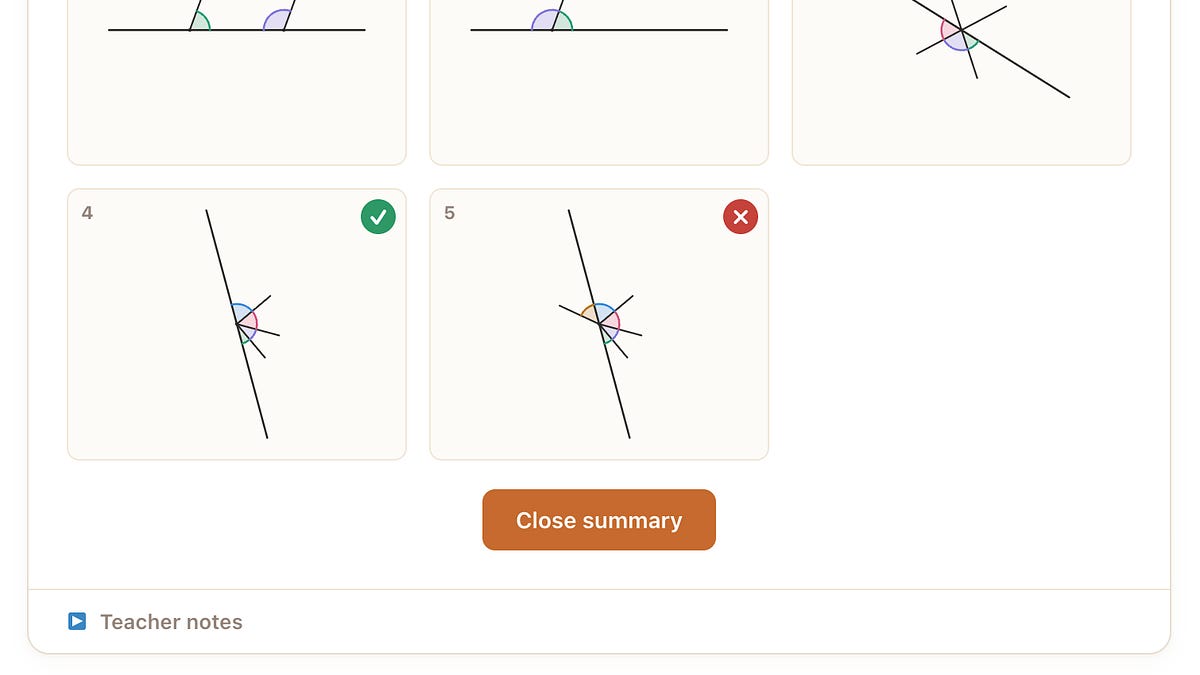
The exchanges illustrate a genuinely collaborative dynamic where both human expertise and AI reasoning improve the final output. Barton emphasizes that the value lies not in the AI producing correct resources on the first try, but in the pedagogical reasoning surfaced through back-and-forth dialogue — reasoning he might have missed when bogged down in formatting and typing. He also advocates using voice dictation (via Wispr Flow) to free up working memory for deeper thinking, and shares links to the resulting interactive resources on topics like integers, standard form, and angles on a straight line.
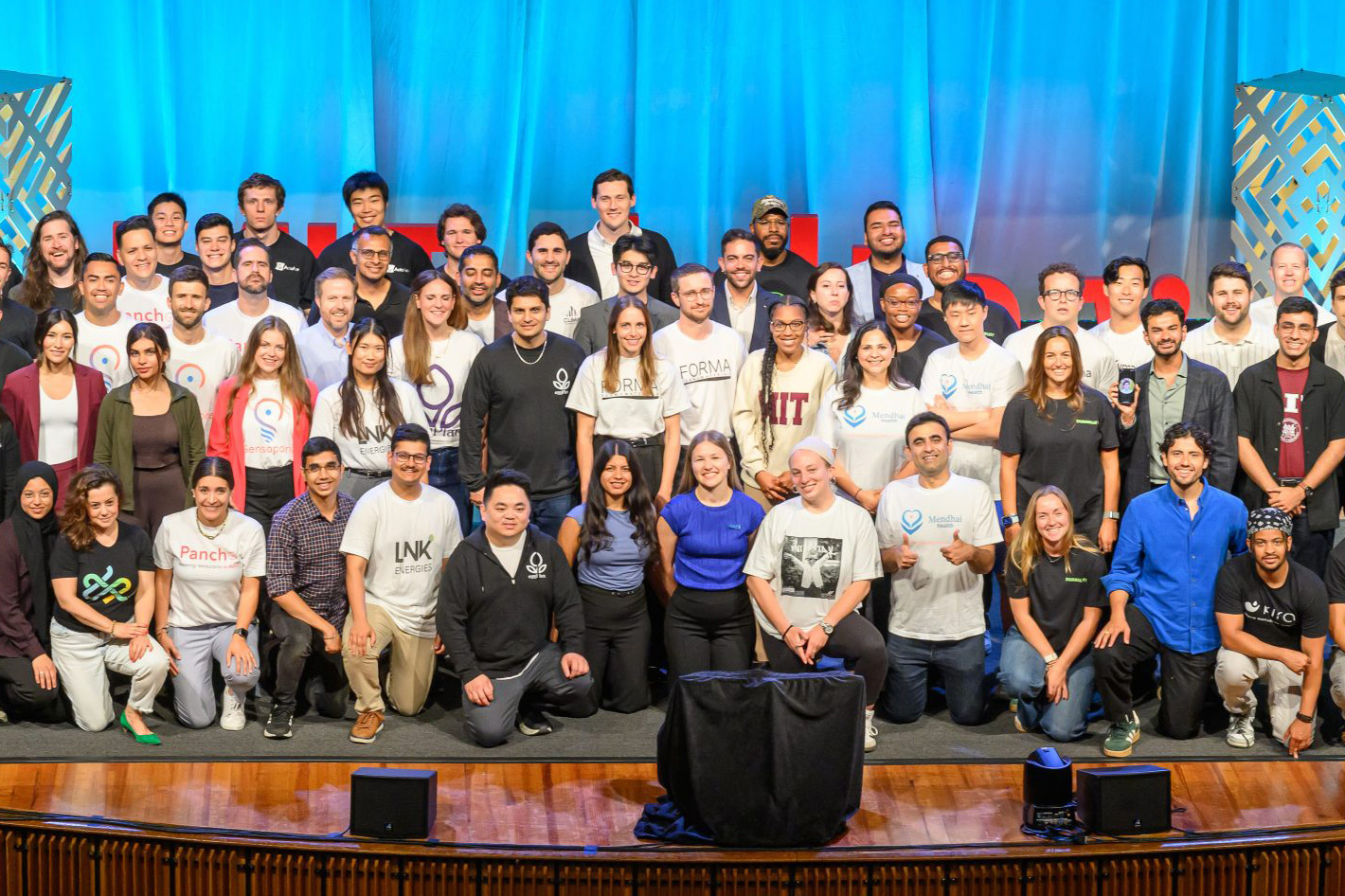
MIT's Martin Trust Center for MIT Entrepreneurship is navigating the AI revolution with a nuanced approach: while AI tools are reshaping how startups are built, the fundamentals of entrepreneurship remain unchanged. Through its delta v summer accelerator program, the Trust Center encourages students to leverage AI for coding, brainstorming, drafting presentations, and learning about new industries, but emphasizes that talking to customers and validating ideas in the real world remain irreplaceable. The center's generative AI app, Jetpack, guides users through the 24 steps of disciplined entrepreneurship, suggesting customer segments, business models, and product plans — but positions its outputs as first drafts rather than final answers.
The cohort's experiences illustrate both AI's power and its pitfalls. Cognify, an AI-native company founded by MBA candidate Murtaza Jameel, uses AI tools across all processes from ideation to programming, while Mendhai Health co-founder Aanchal Arora cautions that overreliance on AI can undermine customer understanding. Trust Center leaders note that large language models, built on averages, can be less effective for targeting specific demographics — a critical shortcoming for entrepreneurs trying to identify niche markets. Despite the hype around AI agents and automation, founders in the program consistently pointed to the human elements — mentorship, networks, and advisor relationships — as what makes delta v truly valuable.
The Prompt Engineering Guide is a comprehensive resource dedicated to the emerging discipline of prompt engineering — the practice of designing and optimizing prompts to effectively leverage large language models (LLMs). It highlights how researchers use prompt engineering to enhance LLM performance on tasks like question answering and arithmetic reasoning, while developers use it to build robust prompting techniques that interface with LLMs and external tools.
Beyond just crafting prompts, the guide emphasizes that prompt engineering encompasses a broad set of skills for interacting with and understanding LLMs, including improving model safety, integrating domain knowledge, and augmenting models with external tools. The resource compiles the latest research papers, advanced techniques, model-specific guides, lectures, and tools. It also offers structured courses ranging from beginner-level prompt engineering fundamentals to intermediate courses on building effective AI agents with function calling and tool integration.