
Epoch AI has launched the ChatGPT Usage Explorer, a public research tool built on metadata from 8.3 million messages across 660,000 conversations by 5,000 US YouGov panelists. Unlike most behavioral data on AI use, which is either self-reported or published by AI companies themselves, this dataset provides independent, message-level records spanning from ChatGPT's November 2022 launch through 2026. The explorer publishes nine metrics covering panelist activity, conversation patterns, model usage, and demographic breakdowns, all without exposing any message text.
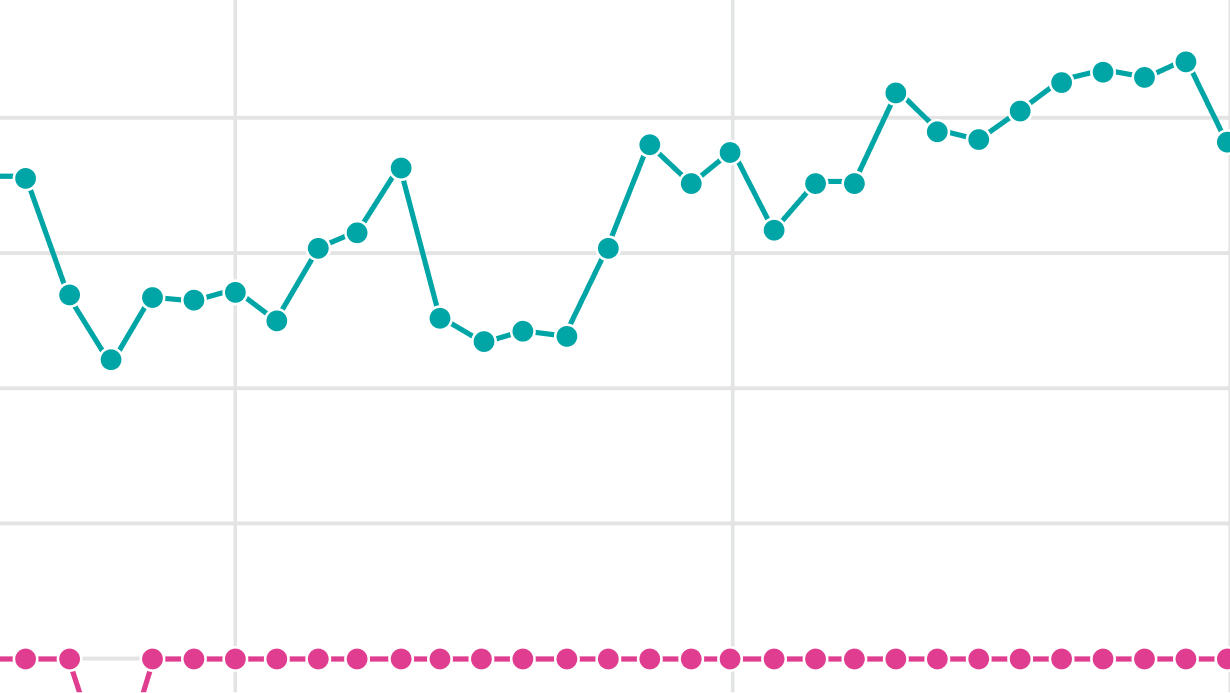
The clearest finding is intensification: active users are steadily using ChatGPT more. The median number of monthly messages per active panelist rose from 14 in January 2023 to 36 in December 2025, and the share of panelists using ChatGPT on 21 or more days per month quadrupled from 2.6% to 10.5%. Usage is also highly concentrated — the top 10% of users sent 63% of all prompts. Interestingly, while mean conversation length grew significantly, the median conversation remained just two prompts throughout the entire period.
The authors are transparent about limitations: the dataset skews older and more educated than ChatGPT's overall user base, and is subject to survivorship bias since all panelists had to have used ChatGPT in 2026. Despite this, the panel's usage rates closely match OpenAI's own published figures, with weekly active panelists averaging 4.3 prompts per day versus OpenAI's implied 3.7. Epoch AI positions the explorer as a complement to its representative polling work and plans to further analyze heavy users and individual usage trajectories over time.
OpenAI has released a detailed study analyzing over 1 million randomly sampled ChatGPT conversations, revealing how its estimated 700 million active users interact with the platform. The data shows that 70% of messages are unrelated to work, with the three largest categories being practical guidance (28.1%), writing assistance (28.3%), and information seeking (21.3%). Users aged 18–25 account for roughly half of all messages, and growth has been particularly strong in low- and middle-income countries.
Notably, while only about 1.9% of conversations involve relationships or personal reflection, that still translates to approximately 342 million weekly conversations touching on emotional support — a use case these general-purpose models were not designed for. The American Psychological Association (APA) highlights this as a concern, particularly for vulnerable populations like youth, and has called for appropriate AI guardrails. Among work-related uses, writing is the dominant task (42%), with two-thirds of those queries focused on modifying existing text rather than generating content from scratch. The study frames most user interactions around three themes: Asking, Doing, and Expressing — positioning ChatGPT as an advisor, task assistant, and space for personal reflection.

A new NBER working paper by researchers at Harvard, Duke, and OpenAI analyzes billions of ChatGPT messages to reveal how people actually use the platform — and the findings challenge common assumptions. Contrary to popular belief, only 4.2% of messages involve coding, just 1.9% relate to relationships or personal reflection, and when people use ChatGPT for writing, two-thirds of the time they're editing or modifying their own text rather than generating content from scratch. The study shows ChatGPT functions more as an editor and thinking partner than a creative replacement.
The biggest surprise is that over 70% of messages are for non-work purposes, up from 53% a year prior. The top three use cases — practical guidance (29%), information seeking (24%), and writing assistance (24%) — account for nearly 80% of all interactions. Tutoring alone makes up roughly 10% of all messages. Demographically, the early gender gap has essentially closed, nearly half of messages come from users aged 18–25, and adoption is surging in low- and middle-income countries.
The research was conducted using a privacy-first approach: no human read actual messages, AI classifiers processed de-identified data in a secure "data clean room," and results were only returned for groups of 100+ users. The authors argue these findings have major implications for organizations (prioritize decision-support over automation), education (leverage AI for personalized learning while teaching critical evaluation skills), and policymakers (recognize AI's substantial value in unpaid "home production" and ensure equitable global access).