
Shortwave is an AI-powered email client built by ex-Googlers that aims to replace and improve upon the traditional Gmail experience. The product centers on an AI agent that can organize inboxes, write emails in the user's voice, search across team emails and attachments, schedule calendar events, and automate workflows through integrations with tools like Slack, Notion, Asana, and HubSpot. Users can create custom AI filters written in plain English to automatically label, star, and archive messages, and the platform offers autocomplete suggestions drawn from email history.
Beyond AI features, Shortwave provides a suite of productivity tools including split inbox tabs, email bundling for bulk triage, delivery scheduling, read receipts, link tracking, and comprehensive keyboard shortcuts. For teams, the platform supports real-time collaboration with shared threads, private commenting, task assignment, shared labels, and shared prompts. The product also integrates with a sister product called Tasklet for 24/7 workflow automation, enabling automatic reply drafting and connections to over 3,000 apps.
Shortwave is available across iOS, Android, Mac, and Windows, and meets CASA Tier 2 compliance for enterprise security. The product has garnered attention from publications like the New York Times and The Verge, and counts professionals from companies like Foursquare, Y Combinator, and Twilio among its users.
HubSpot co-founder Dharmesh Shah announces YouSpot, described as an AI-native Solo CRM built under the HubSpot Next umbrella. The product targets one-person companies, offering a "second brain" that ingests business context and helps solo operators remember details they might otherwise miss. The announcement mentions an introductory launch price, signaling an early-access or promotional rollout.
The positioning is notable: rather than scaling down an enterprise CRM, YouSpot appears designed from the ground up for solopreneurs, leaning on AI to replace the team workflows a traditional CRM assumes. It reflects a broader industry trend of AI-first tools tailored to micro-businesses — a segment historically underserved by conventional CRM platforms.
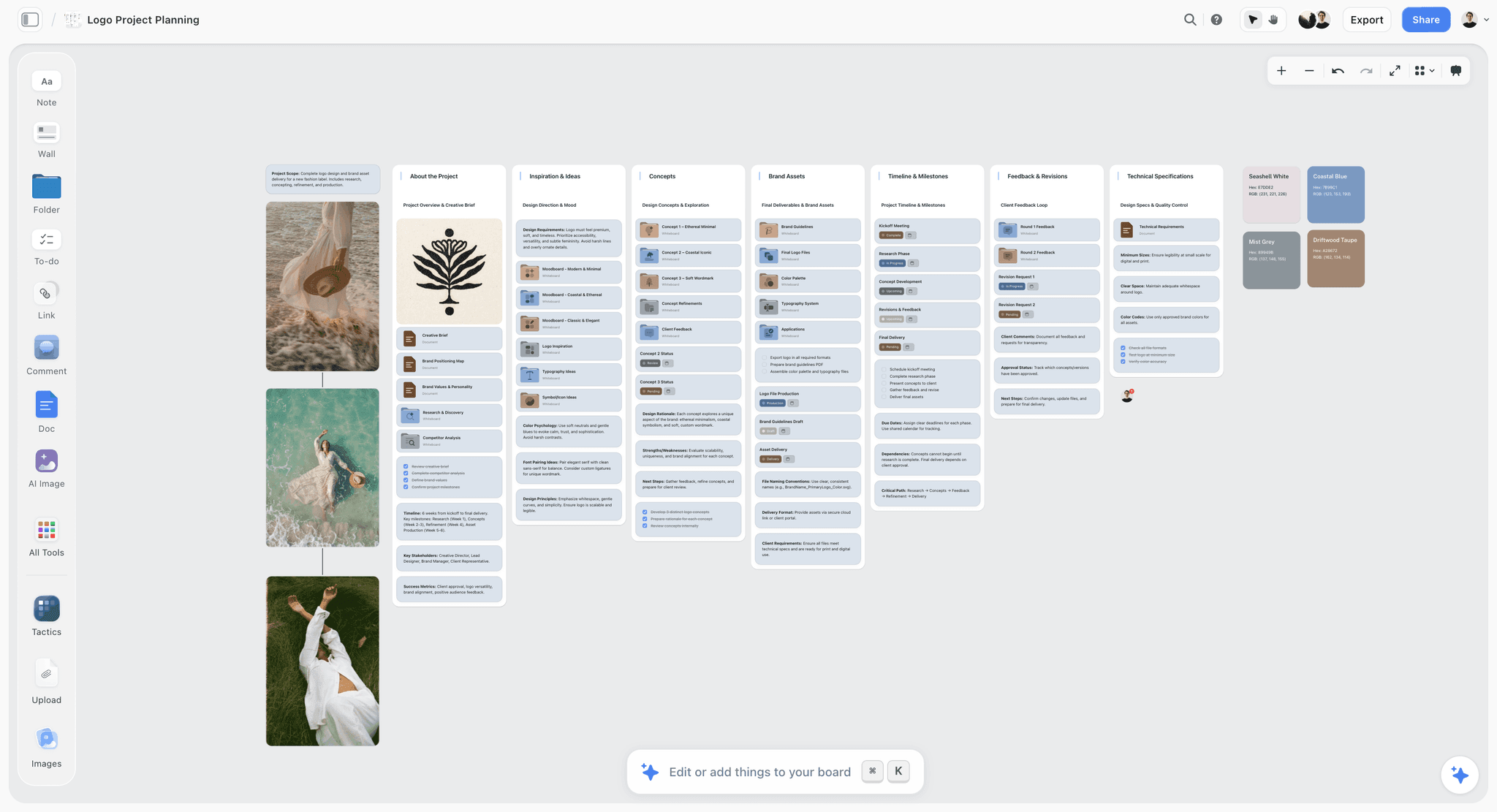
This lengthy article from Storyflow ranks what it considers the 13 best AI tools for solopreneurs in 2026, with a heavy emphasis on cognitive load reduction as the primary evaluation criterion. The top three picks are Storyflow (the author's own product), Framekit (also the author's product), and ChatGPT, followed by Notion AI and Claude. The list also covers ClickUp Brain, an outbound sales stack of Apollo + Clay + Smartlead, Reflect, Jasper, Intercom Fin, Sudowrite, Mem, and Cursor. The article frames the solopreneur's core problem not as lacking features but as lacking attention — arguing that tools which hold cross-functional context (brand, marketing, customer, product) in a single workspace outperform specialized point solutions.
The piece is notably self-promotional, with the author ranking their own two products at #1 and #2 while acknowledging this bias upfront. Storyflow is positioned as a visual AI canvas where the AI reads an entire project board — including brand strategy docs, customer personas, and marketing plans — before responding, distinguishing it from context-blind chat interfaces. The article segments solopreneur archetypes (indie SaaS founders, agency-of-one consultants, course creators, e-commerce operators, content creators) and recommends tailored three- to four-tool stacks for each, with realistic monthly budgets ranging from $14–$350 depending on the use case. Rating criteria weighted cognitive load at 30%, AI quality at 20%, and context awareness at 15%, with detailed pricing tables and comparisons throughout.
David Cummings observes a notable shift in the SaaS landscape: multiple entrepreneurs he has spoken with recently are building all-in-one, AI-powered vertical SaaS applications and gaining significant traction. He contrasts this with the previous generation of SaaS companies, which were typically horizontal platforms that excelled in breadth but lacked industry-specific depth.
The post highlights an emerging trend where AI capabilities are enabling startups to create comprehensive, industry-specific solutions rather than broad, general-purpose tools. This signals a potential paradigm shift in how SaaS products are conceived and built, with vertical specialization combined with AI becoming the new competitive advantage.
Tejas Rane argues that while SaaS products can be cloned in a weekend, the data moat behind them cannot be easily replicated. He highlights proprietary intelligence as potentially the biggest opportunity for indie hackers in the AI era, suggesting that unique, hard-to-replicate datasets and insights will be the true competitive advantage rather than the software itself.
The post links to a longer piece elaborating on this thesis, positioning data accumulation and proprietary knowledge as the defensible edge that solo founders and small teams should focus on building in an increasingly commoditized software landscape.
Aakash Gupta argues that OpenAI has dramatically accelerated the AI roadmap for every SaaS company by releasing a pattern that mirrors what Notion shipped earlier with its Custom Agents feature. The shared blueprint includes teammates with permissions, connectors, scheduled triggers, and tasks running across tools.
The implication is significant: by making this agentic AI pattern widely accessible, OpenAI has effectively shortened SaaS companies' AI development timelines by an estimated 18 months. What was once a differentiator for forward-thinking products like Notion is now becoming a baseline expectation across the industry.
Aakash Gupta observes that OpenAI has adopted the same AI agent blueprint that Notion pioneered with its Custom Agents feature — specifically the pattern of shared AI teammates with permissions, connectors, scheduled triggers, and cross-tool task execution. He argues this development effectively compresses the AI roadmap for every SaaS company by 18 months, as OpenAI bringing this pattern to a broader audience accelerates the timeline for integrating agentic AI capabilities across the industry.
The post highlights how the emerging standard for AI agents in SaaS is converging around a common architecture: agents that act as collaborative teammates within existing workflows, with proper access controls and the ability to orchestrate actions across multiple tools. The implication is that SaaS companies can no longer afford a slow, incremental approach to AI — the competitive baseline has shifted dramatically.
Sridhar Vembu, CEO of Zoho, shares his perspective on the evolving relationship between SaaS, APIs, and AI. He endorses the concept that "Every SaaS is an API" — the idea that AI-driven agents will contextually integrate underlying SaaS applications, replacing traditional user interfaces with a more seamless, intelligent experience.
Vembu encapsulates this vision with the phrase "AI is the UI" for SaaS, suggesting that the future of software interaction lies not in navigating individual app interfaces but in AI agents orchestrating multiple services on behalf of the user. This points to a significant shift in how SaaS products are built, consumed, and composed together.
Aaron Levie, CEO of Box, observes a significant shift in software pricing dynamics driven by AI. He notes that traditional software has typically been priced between $10–50 per user per month, but AI coding agents are already commanding prices reaching thousands of dollars per month. He frames this as a "revealed preference" — meaning users are demonstrating through their spending that the value delivered by these tools justifies the dramatically higher cost.
Levie suggests that AI coding possesses unique qualities enabling it to scale rapidly, though the full thread elaborating on these qualities is truncated in this excerpt. The observation highlights a potential inflection point in how software is valued and monetized, shifting from seat-based commodity pricing to outcome-based or value-based pricing as AI agents deliver substantially more productivity per dollar spent.