
Epoch AI has launched the ChatGPT Usage Explorer, a public research tool built on metadata from 8.3 million messages across 660,000 conversations by 5,000 US YouGov panelists. Unlike most behavioral data on AI use, which is either self-reported or published by AI companies themselves, this dataset provides independent, message-level records spanning from ChatGPT's November 2022 launch through 2026. The explorer publishes nine metrics covering panelist activity, conversation patterns, model usage, and demographic breakdowns, all without exposing any message text.
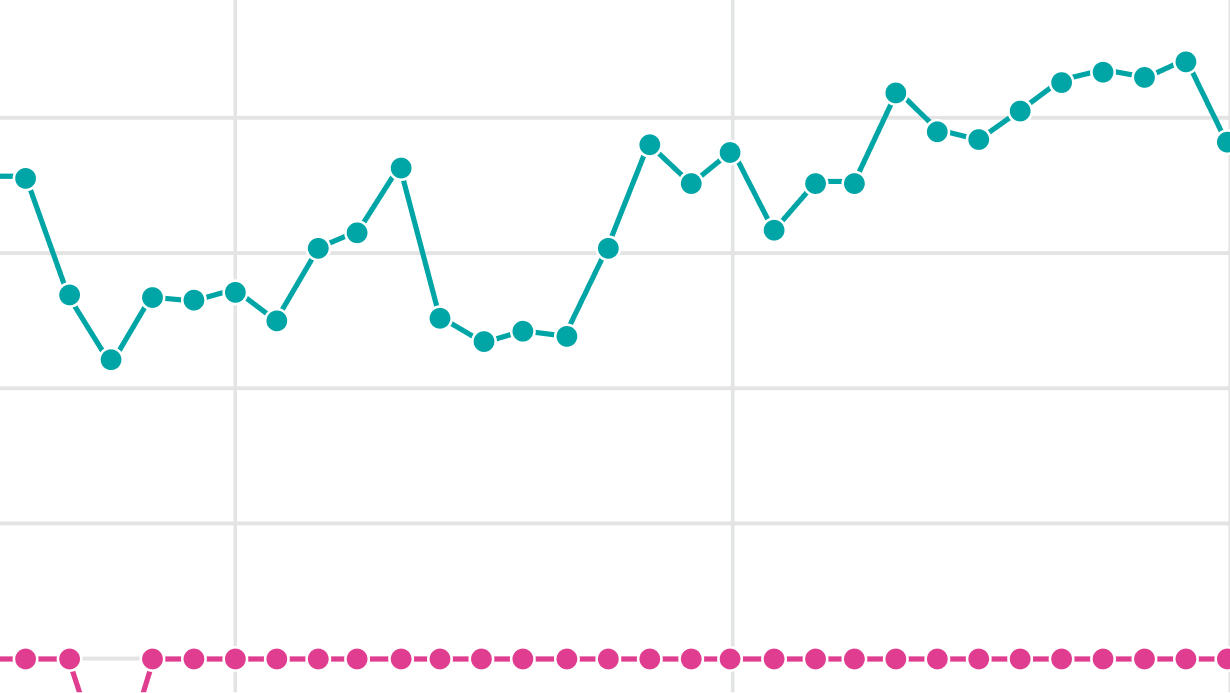
The clearest finding is intensification: active users are steadily using ChatGPT more. The median number of monthly messages per active panelist rose from 14 in January 2023 to 36 in December 2025, and the share of panelists using ChatGPT on 21 or more days per month quadrupled from 2.6% to 10.5%. Usage is also highly concentrated — the top 10% of users sent 63% of all prompts. Interestingly, while mean conversation length grew significantly, the median conversation remained just two prompts throughout the entire period.
The authors are transparent about limitations: the dataset skews older and more educated than ChatGPT's overall user base, and is subject to survivorship bias since all panelists had to have used ChatGPT in 2026. Despite this, the panel's usage rates closely match OpenAI's own published figures, with weekly active panelists averaging 4.3 prompts per day versus OpenAI's implied 3.7. Epoch AI positions the explorer as a complement to its representative polling work and plans to further analyze heavy users and individual usage trajectories over time.
Allie K. Miller shares a summary of six prompting tips derived from a comprehensive review of over 1,500 research papers on prompt engineering. The tips she highlights include using more examples in prompts whenever reasonable and randomly ordering those examples rather than clustering similar ones together. The post references what AI experts consider a foundational paper on prompt engineering, positioning it as essential reading for anyone working with large language models.
While the full thread appears truncated, the visible tips emphasize the importance of few-shot prompting best practices — specifically that quantity and ordering of examples significantly impact AI model performance. This kind of research-backed guidance is valuable for practitioners looking to move beyond intuition-based prompting toward more systematic, evidence-driven approaches.
Jenna Russell announces the public release of StoryScope, a dataset and codebase designed for narrative analysis and AI authorship research. The release includes the full code, 10,272 prompts, 51,336 AI-generated narratives (each approximately 5,000 words), and per-story features. The dataset is intended to support future research in understanding how AI systems generate long-form narratives, making it a significant resource for the computational narrative and AI evaluation communities. Russell shares this ahead of her presentation at COLM 2026.
Bluevine shares findings from its latest research on AI adoption among small and medium-sized businesses (SMBs). The data reveals that 74% of SMB owners are already using or testing AI, and 68% believe it will benefit their business. However, the company notes that the narrative around AI transforming small businesses is more nuanced than it appears — confidence in AI has its limits despite widespread experimentation.
The post highlights the gap between AI adoption rates and full confidence in its impact, suggesting that while SMB owners are open to AI, skepticism and uncertainty remain part of the picture. Bluevine appears to be teasing a deeper dive into the data, positioning itself as a resource for understanding how AI is truly reshaping the small business landscape.
Adam Grant highlights new evidence suggesting that moderate AI consultation leads to the most original ideas, compared to either extensive or rare use. He argues that heavy reliance on AI doesn't just stifle critical thinking — it also constrains creativity. The sweet spot appears to be consulting AI sometimes rather than constantly or barely at all, reinforcing the idea that independent thought remains a foundational element of ingenuity.
Advait Sarkar shares a research paper exploring how AI and generative models are revolutionizing knowledge work. The paper examines the broader implications of these technologies on creativity, plagiarism, credit, and copyright — key issues that arise as generative AI becomes increasingly integrated into creative and professional workflows.
Alex Imas shares an update on a "living document" he started in late January tracking the impact of AI on productivity. He notes a key disconnect he had identified: while micro-level studies showed clear productivity boosts from AI, the macro-level evidence remained muted. He wrote at the time that he expected this gap to close in the near term — and apparently that timeline turned out to be shorter than anticipated, suggesting that macro productivity gains from AI are now beginning to materialize.
The post highlights an important inflection point in the AI and productivity debate, where aggregate economic indicators may finally be catching up to the promising results seen in individual firm- and worker-level experiments.
A new NBER working paper by researchers at Harvard, Duke, and OpenAI analyzes billions of ChatGPT messages to reveal how people actually use the platform — and the findings challenge common assumptions. Contrary to popular belief, only 4.2% of messages involve coding, just 1.9% relate to relationships or personal reflection, and when people use ChatGPT for writing, two-thirds of the time they're editing or modifying their own text rather than generating content from scratch. The study shows ChatGPT functions more as an editor and thinking partner than a creative replacement.
The biggest surprise is that over 70% of messages are for non-work purposes, up from 53% a year prior. The top three use cases — practical guidance (29%), information seeking (24%), and writing assistance (24%) — account for nearly 80% of all interactions. Tutoring alone makes up roughly 10% of all messages. Demographically, the early gender gap has essentially closed, nearly half of messages come from users aged 18–25, and adoption is surging in low- and middle-income countries.
The research was conducted using a privacy-first approach: no human read actual messages, AI classifiers processed de-identified data in a secure "data clean room," and results were only returned for groups of 100+ users. The authors argue these findings have major implications for organizations (prioritize decision-support over automation), education (leverage AI for personalized learning while teaching critical evaluation skills), and policymakers (recognize AI's substantial value in unpaid "home production" and ensure equitable global access).
Iason Gabriel announces a new piece published in Nature titled "We Need a New Ethics for a World of AI Agents." The paper argues that AI systems are undergoing an "agentic turn," fundamentally shifting from passive tools to active participants in the world. Gabriel contends that this transformation demands a new ethical framework to address the implications of increasingly autonomous AI agents operating in society.
Lilian Weng shares a reflection on the intensive collaborative process behind a major project, revealing that the team produced 12 versions (plus many subversions) and 137 pages in their training run log book over the past few months. She describes the experience as both fun and stressful.
The post highlights a key insight: human-human collaboration turns out to be essential to improving human-AI collaboration. This underscores that even in the age of advanced AI systems, effective teamwork among people remains a critical ingredient in pushing the boundaries of AI research and development.
Roger Beaty shares a link to a comprehensive review of research on creativity in AI, spanning domains from artistic creation to scientific discovery. The review is notably grounded in established creativity theories, suggesting it bridges the gap between AI capabilities and the psychological or cognitive science frameworks traditionally used to understand human creativity. This makes it a potentially valuable resource for researchers and practitioners interested in how AI-generated outputs relate to foundational concepts of creative thinking.
Researchers from Perplexity and academic collaborators conducted a field study comparing a conversational AI assistant with an autonomous AI agent, finding that AI agents don't merely accelerate knowledge work — they fundamentally change its nature. The study highlights a key distinction: a conversational assistant returns information quickly (summaries, links) that a user must then act on manually, while an autonomous agent delivers completed work products such as built spreadsheets, drawn charts, and draft memos, albeit with a longer processing time.
The research, published in Harvard Business Review, suggests that AI agents broaden the scope of knowledge work by shifting what counts as a task boundary. Rather than simply helping workers find information faster, agents take on multi-step workflows end to end. This has significant implications for competitive strategy, change management, and how organizations think about productivity and the evolving role of human judgment in an AI-augmented workplace.

Scott Barry Kaufman, a psychologist known for his work on creativity and intelligence, shares a link to research indicating that generative AI is making human creative output more uniform. The post highlights real-world evidence suggesting that as people increasingly rely on AI tools for creative tasks, the diversity and originality of their output diminishes, leading to greater homogeneity. This finding carries significant implications for debates around AI's role in creative industries and whether these tools enhance or constrain human imagination.
Ronnie Chatterji highlights a dramatic shift in how people interact with AI, comparing findings from two studies. In a 2025 paper titled "How People Use ChatGPT", the research team found that usage was primarily centered around "asking" rather than "doing" — users were treating AI as an information tool rather than a task executor.
In a new 2026 study on Codex, however, the landscape has changed significantly. The share of individual users delegating full workday tasks (8 hours or more) to AI rose nearly 10x from January to May 2026. This represents a fundamental transition from AI as a conversational assistant to AI as an autonomous agent capable of handling substantial, real-world work, signaling a major inflection point in AI adoption and workforce dynamics.
Rohan Paul shares findings from a new study examining ChatGPT's impact on student learning. The research indicates that ChatGPT helps students learn more effectively, with the largest gains observed in actual performance on tasks and tests. The study also found improvements in how learning feels (affective outcomes) and in supporting advanced thinking skills, though these effects were smaller in magnitude.
The study reports a medium positive effect on learning outcomes overall, suggesting that AI chatbots like ChatGPT can serve as meaningful educational tools. The distinction between performance-based gains and softer measures like learning experience and higher-order cognition provides a nuanced view of where AI assistance is most impactful in educational settings.
NVIDIA Robotics announces the launch of its new publication series called the NVIDIA Robotics Research & Development Digest (R²D²). This first edition focuses on highlighting the latest breakthroughs in physical AI and robotics coming out of NVIDIA Research.
The inaugural issue takes a deep dive into enhancing robot mobility using novel workflows and AI techniques. The series aims to serve as a regular digest of cutting-edge developments from NVIDIA's robotics research division, signaling the company's continued investment in advancing the state of the art in robotics and embodied intelligence.
Fathom shares its latest report mapping six narratives that shape the debate around AI's impact on work. The organization frames the discussion around two core questions: how disruptive AI will be and whether the transition requires intervention. The report aims to help readers identify where they fall within this landscape of competing perspectives.
The post serves as a teaser for a more detailed report linked separately, positioning Fathom as a think tank or research organization analyzing the discourse around AI and labor. By distilling the debate into a structured framework of six narratives, the report appears designed to bring clarity to an increasingly polarized conversation about AI-driven workforce transformation.
Deedy introduces what he calls "Neolabs" — a term for pre-revenue, scale-stage startups focused on long-term AI breakthroughs rather than immediate commercialization. He compiles a comprehensive list of 50 such companies, positioning them as a distinct category in the AI startup ecosystem.
The post highlights a growing trend of ambitious AI ventures that prioritize fundamental research and breakthrough capabilities over near-term revenue, suggesting these Neolabs represent a significant and trackable segment of the artificial intelligence landscape. The accompanying image presumably details all 50 startups on the list.
Columbia Business School shares new research that challenges common assumptions about AI-generated art and its effect on human creativity. Contrary to fears that AI art diminishes the value of human-made work, the findings suggest that the presence of AI-generated art can actually enhance the perceived value of human-created pieces.
This research reframes the narrative around AI's role in creative industries, suggesting a complementary rather than competitive dynamic between AI and human artists. The post links to further details on the study's methodology and implications.
ROBIN is introduced as a pioneering multi-agent AI system designed to automate the full cycle of scientific discovery. It is described as the first AI system capable of autonomously performing all key steps of the scientific method, including hypothesis generation, experiment proposal, data analysis, and hypothesis refinement, all within an iterative loop.
This represents a significant development in the intersection of biology and AI, suggesting that autonomous research agents could accelerate the pace of scientific breakthroughs by handling the end-to-end research workflow without constant human intervention. The post highlights ROBIN's potential to reshape how discoveries are made by closing the loop between generating ideas and refining them based on experimental outcomes.