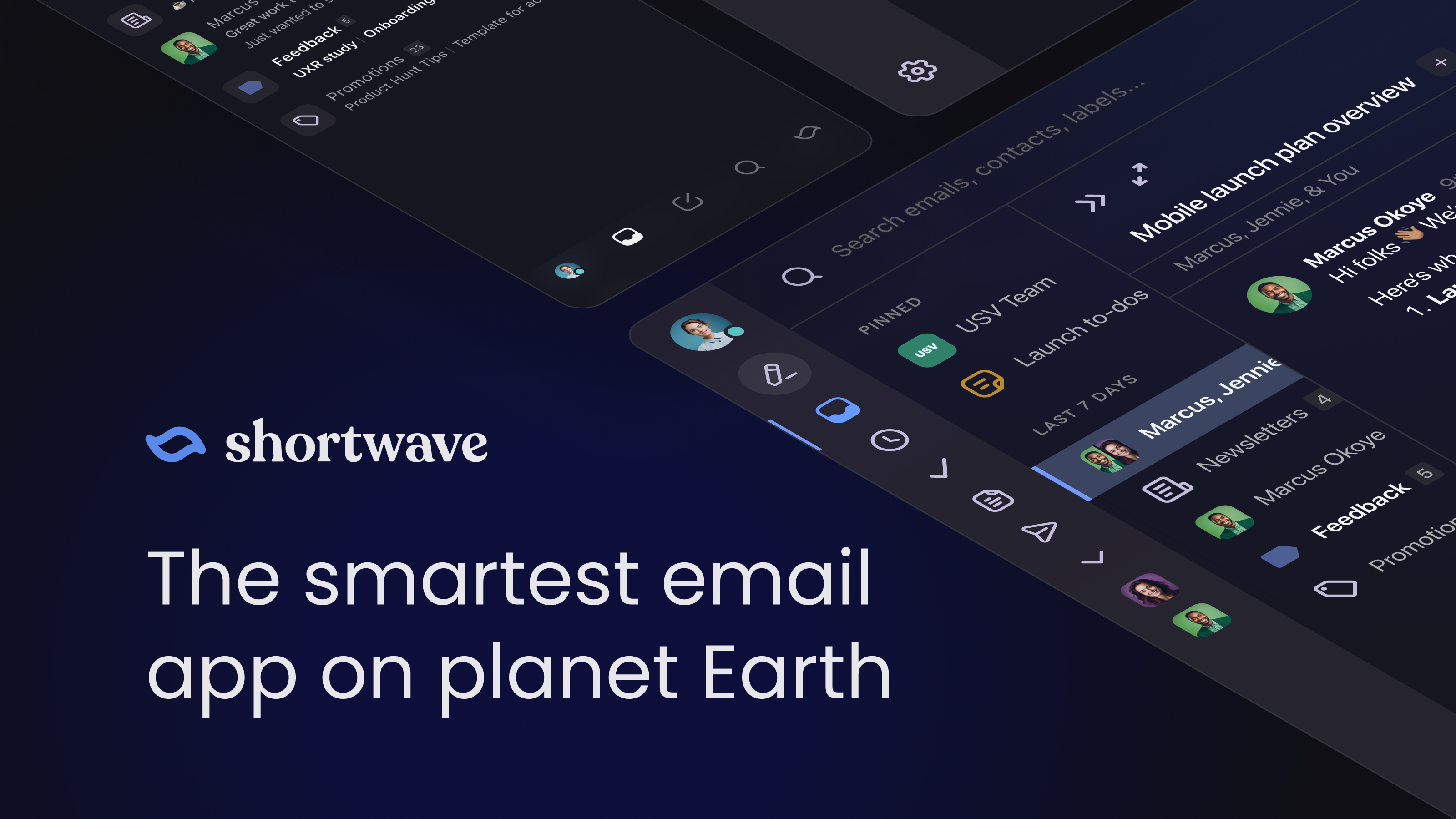
Shortwave is an AI-powered email client built by ex-Googlers that aims to replace and improve upon the traditional Gmail experience. The product centers on an AI agent that can organize inboxes, write emails in the user's voice, search across team emails and attachments, schedule calendar events, and automate workflows through integrations with tools like Slack, Notion, Asana, and HubSpot. Users can create custom AI filters written in plain English to automatically label, star, and archive messages, and the platform offers autocomplete suggestions drawn from email history.
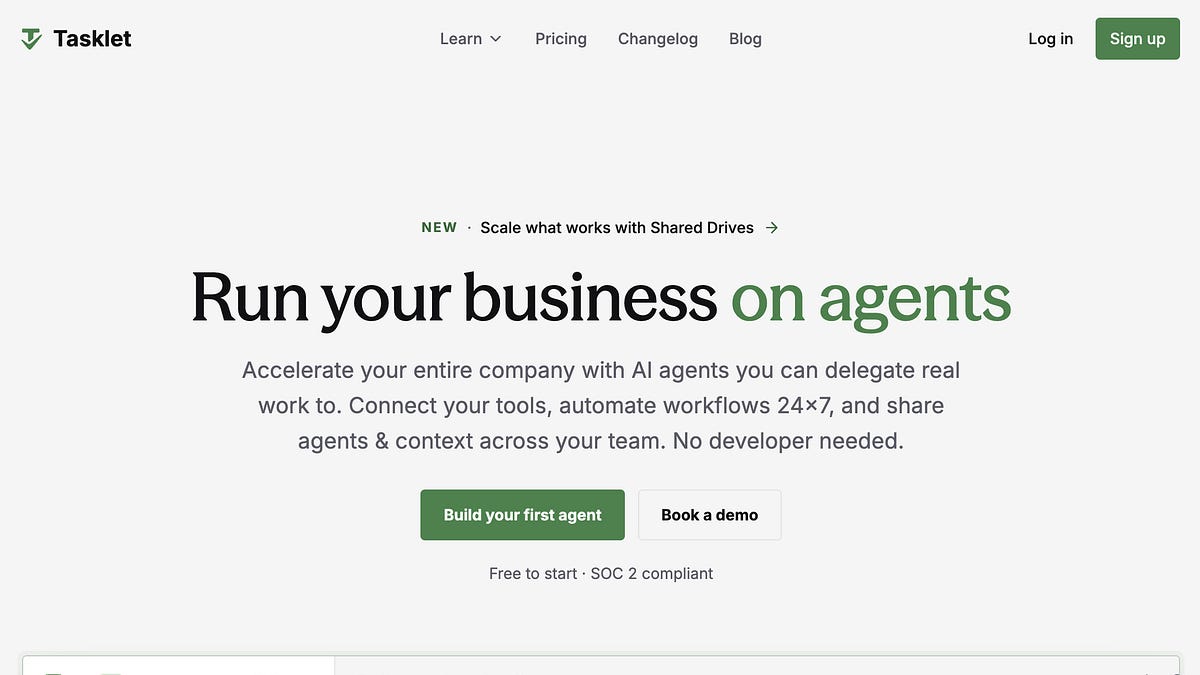
Beyond AI features, Shortwave provides a suite of productivity tools including split inbox tabs, email bundling for bulk triage, delivery scheduling, read receipts, link tracking, and comprehensive keyboard shortcuts. For teams, the platform supports real-time collaboration with shared threads, private commenting, task assignment, shared labels, and shared prompts. The product also integrates with a sister product called Tasklet for 24/7 workflow automation, enabling automatic reply drafting and connections to over 3,000 apps.
Shortwave is available across iOS, Android, Mac, and Windows, and meets CASA Tier 2 compliance for enterprise security. The product has garnered attention from publications like the New York Times and The Verge, and counts professionals from companies like Foursquare, Y Combinator, and Twilio among its users.
Lilian Weng shares a reflection on the intensive collaborative process behind a major project, revealing that the team produced 12 versions (plus many subversions) and 137 pages in their training run log book over the past few months. She describes the experience as both fun and stressful.
The post highlights a key insight: human-human collaboration turns out to be essential to improving human-AI collaboration. This underscores that even in the age of advanced AI systems, effective teamwork among people remains a critical ingredient in pushing the boundaries of AI research and development.
David Sherry explores a question that has puzzled him: how do small, resource-constrained teams actually use AI collaboratively rather than in individual silos? He found his answer through a USV article about Tasklet, a tool whose tagline — "Put agents to work across your company" — resonated with his thinking. He sees small startups and independent teams adopting a mix of tools like Tasklet alongside custom internal tooling to build shared company-level intelligence.
Key takeaways from the article include practical advice on team-wide AI adoption: name agents with human-like names to encourage integration into workflows, add agents to regular communication channels so teams grow comfortable with them, and start with narrow, focused agents that broaden over time. Sherry also mentions Skydive as another interesting app in this space and emphasizes the importance of having an AI Champion — someone who owns and drives AI transformation within the team — to avoid stalling out on adoption.
Lilian Weng shares a reflection on the intensive effort behind producing a training run log book, which resulted in 12 versions (plus many subversions) and 137 pages over the course of several months. She highlights the demanding yet enjoyable collaborative process involved.
Her key takeaway is that human-human collaboration turns out to be essential for improving human-AI collaboration — a notable insight from someone deeply embedded in AI research at OpenAI. The post underscores that behind advances in AI systems, significant teamwork and iterative human effort remain critical.
Harvard Business Review highlights research showing that AI does not automatically improve teamwork — and can actually undermine it. A five-month study of managers found that without intentional integration, AI tools can reduce engagement, narrow participation in meetings, and shift ownership away from the team. The post challenges the widespread organizational assumption that simply adopting AI will enhance collaboration, emphasizing that deliberate strategies are needed to ensure AI supports rather than erodes team dynamics.
Anton Korinek announces an updated JEL (Journal of Economic Literature) paper on Generative AI for Economic Research, highlighting how large language models are now capable of sophisticated reasoning and collaboration. The update covers how collaborative workspaces are transforming research workflows and presents three dozen proven use cases for economists. Korinek encourages researchers to level up their AI skills heading into 2025, positioning this resource as a practical guide for integrating LLMs into economic research.
A team of researchers from Capgemini and academia highlight the challenges of integrating AI into team settings, particularly meetings. According to a global survey of 500 executives by the Capgemini Research Institute, active use of AI in team meetings is expected to more than triple in the next three years, with leaders anticipating better outcomes and higher-quality decisions. However, the authors caution against uncritical optimism.
Their research reveals that AI doesn't automatically improve teamwork — in fact, it can have the opposite effect. Without intentional groundwork, introducing AI into meetings can reduce engagement, narrow participation, and fragment discussions, ultimately shifting ownership away from the team. The article proposes three practices to help teams integrate AI effectively, though the full details are behind a paywall. The core message is clear: organizations must be deliberate and structured in how they bring AI into collaborative workflows rather than assuming the technology will seamlessly enhance group dynamics.

Will Allen, an independent systems scientist and facilitator, shares practical reflections on how AI tools like GPT and Perplexity have become quiet thought partners in his collaborative and systems-oriented work. He outlines four key uses: exploring new research and perspectives, supporting systems framing and complexity, making writing less isolating, and testing how content lands with different audiences. Throughout, he emphasizes that these tools serve as scaffolding rather than substitutes for human judgment.
A central theme is the distinction between what AI can and cannot do in participatory, systems-facing settings. Allen provides a useful comparison table showing that while AI excels at rapid scanning, summarizing interviews, and generating draft outlines, it fundamentally cannot replicate relationship-building, facilitation, trust, or navigation of power dynamics — the core of collaborative research and evaluation work. He also raises important ethical considerations around data sensitivity, source attribution, and transparency when using AI-generated content.
The piece ultimately argues that AI works best when it stays in the background, helping practitioners show up more clearly and thoughtfully in the relational, human-centered work of collaboration, learning, and systems change. Allen's perspective is grounded in over 30 years of experience in sustainable development and natural resource management, lending practical credibility to his balanced take on AI adoption.