Editor's Synopsis
A Nature Computational Science perspective article by Microsoft Research authors explores how generative AI is reshaping knowledge work — and who actually benefits. Recent empirical research shows that people primarily use generative AI for high-complexity, knowledge-work tasks, but the distribution of these benefits is far from equal. The paper examines social and place-based divides in AI adoption, highlighting disparities across demographics, geographies, and economic contexts.
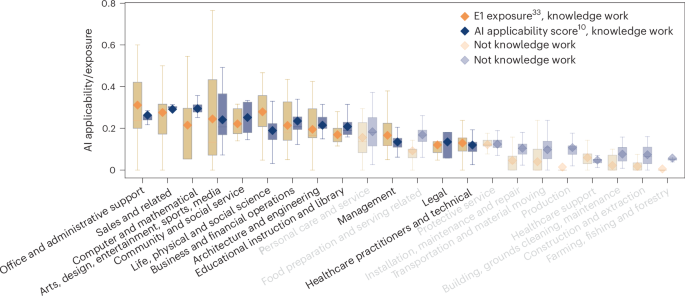
The authors reference data on AI exposure across occupational groups and global internet traffic patterns to ChatGPT, revealing significant inequities in access and usage. While AI tools like GitHub Copilot and Microsoft 365 Copilot have demonstrated measurable productivity gains — particularly for lower-skilled workers who see the largest relative improvements — concerns remain about displacement in creative fields such as translation, illustration, and media. The paper also draws on Bloom's taxonomy to frame how AI affects different cognitive task levels and warns that uncritical reliance on AI can actually harm learning outcomes.
The perspective calls for both technical and social interventions to ensure AI democratizes rather than concentrates knowledge work. Issues such as multilingual AI performance gaps, regional digital divides, and uneven organizational adoption are identified as key barriers. The authors argue that without deliberate action, generative AI risks exacerbating existing inequalities among workers and across nations, rather than bridging them.