Editor's Synopsis
Lenny Rachitsky challenges conventional wisdom about how AI will impact product management, arguing that the truth is the opposite of what most people expect. While polls suggest PMs believe low-level execution and communication tasks will be most affected by AI, Rachitsky contends that AI will have the most profound impact on high-level strategic skills — developing strategy, crafting vision, identifying opportunities, and setting goals — because AI excels at analyzing massive amounts of data and producing insightful answers. He draws parallels to AlphaGo's famous move 37, Sam Altman's plan to have AGI figure out OpenAI's business model, and Jensen Huang's prediction that AI will replace programming.
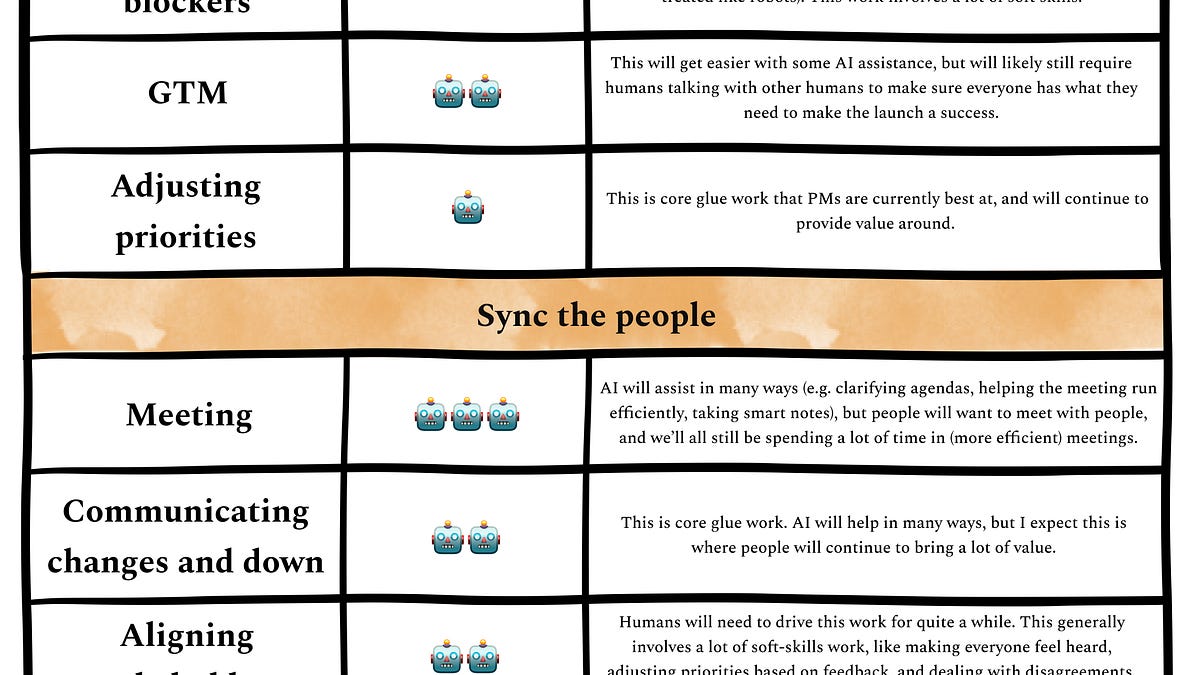
Conversely, Rachitsky argues that soft skills will become even more valuable and serve as key differentiators among companies. Skills like aligning stakeholders, unblocking teams, building buy-in, understanding nuance, and creating delightful user experiences are where humans will retain an edge for the longest. He frames the PM role as consisting of three core jobs — shaping the product, shipping the product, and enabling the team — and ranks each sub-task on a 1-to-5 scale of AI disruption. Strategy and goal-setting receive the highest disruption scores (4 out of 5), while tasks like giving design feedback and building roadmaps score lower, reflecting the continued need for human judgment, collaboration, and creativity. The key takeaway: PMs should double down on soft skills while learning to leverage AI as a force multiplier for their hard skills.