
Ronnie Chatterji highlights a dramatic shift in how people interact with AI, comparing findings from two studies. In a 2025 paper titled "How People Use ChatGPT", the research team found that usage was primarily centered around "asking" rather than "doing" — users were treating AI as an information tool rather than a task executor.
In a new 2026 study on Codex, however, the landscape has changed significantly. The share of individual users delegating full workday tasks (8 hours or more) to AI rose nearly 10x from January to May 2026. This represents a fundamental transition from AI as a conversational assistant to AI as an autonomous agent capable of handling substantial, real-world work, signaling a major inflection point in AI adoption and workforce dynamics.
A Morgan Stanley survey of 935 corporate executives across five sectors reveals that AI adoption is driving 11.5% average productivity gains alongside a 4% net reduction in jobs globally. The survey, published in February 2026, focused on industries deemed most exposed to near-term AI impact: consumer staples distribution & retail, real estate, transportation, healthcare equipment & services, and automobiles & components. While U.S. companies actually reported a 2% net gain in jobs, Europe experienced the most significant negative employment effects, and the automotive sector saw the highest net job loss at 10%.
The workforce impact is uneven across company sizes and experience levels. Larger firms (501–1,000 employees) cut 15% of positions, while smaller companies (under 49 employees) saw a 4% net gain. Entry-level employees face the greatest risk of job elimination, while workers with 2–10 years of experience are more likely to be retrained or redeployed. Notably, 27% of employees were retrained in the past 12 months, signaling growing demand for reskilling programs.
For investors, Morgan Stanley highlights that some sectors could achieve savings exceeding 50% of estimated 2026 pre-tax earnings at full AI adoption, with consumer staples, real estate, and transportation potentially surpassing 100% of earnings in benefits. The firm advises investors to reassess AI exposure across portfolios, noting that if AI capabilities continue improving at a non-linear rate, the magnitude of value creation could far exceed current expectations.

ICIC (Initiative for a Competitive Inner City) has published a report titled AI in Business: How Small Business Owners Are Learning, Using, and Navigating Challenges with AI Tools, examining AI adoption among small businesses. Based on a survey of over 3,700 small business owners and five focus groups, the research finds that nearly 89% of surveyed small businesses are already using AI tools for everyday tasks such as drafting emails, creating marketing content, and analyzing data. More than 60% report increased productivity and improved employee job satisfaction as a result of AI adoption.
Despite widespread usage, the report highlights persistent knowledge gaps, implementation challenges, and concerns about responsible AI adoption. Small business owners express a strong preference for hands-on, flexible learning formats — including online courses, podcasts, and peer learning groups — to build AI confidence. The report offers targeted recommendations: educational programs should reflect the diverse needs of small business owners, employees should be included in technology decision-making, and greater transparency about AI's benefits and risks is needed to promote responsible use.
The research is particularly notable for its focus on under-resourced communities, aligning with ICIC's mission to drive inclusive economic prosperity. By identifying where AI education and training can have the greatest impact, the report aims to help policymakers, educators, and business support organizations ensure that AI adoption is both effective and equitable across the small business landscape.
PwC announces the launch of its 2026 Global AI Jobs Barometer, a comprehensive study based on analysis of over one billion job listings worldwide. The report examines how the world of work is being reshaped by artificial intelligence, with findings suggesting that AI is not merely automating tasks but fundamentally redefining roles and skill requirements across industries.
This annual barometer serves as a key indicator of how AI adoption is influencing labor markets globally, tracking shifts in employer demand and the evolving skill sets workers need to remain competitive. The scale of the dataset — over a billion job postings — underscores the breadth of PwC's analysis and positions the report as a significant resource for understanding AI's impact on employment trends.
Gracy Chen, associated with Bitget, shares a chart she encountered at an MIT event from an NBER working paper titled Artificial Intelligence and the Labor Market. The chart examines how exposed different jobs are to AI disruption across wage levels, highlighting the varying degrees of vulnerability depending on income brackets.
The post points to ongoing academic research into AI's impact on employment, suggesting that the relationship between wage levels and AI exposure is a nuanced and important topic for understanding the future labor market. By sharing this research, Chen draws attention to the intersection of AI advancement and workforce economics.
A National Academies consensus study examines how recent advances in artificial intelligence—particularly generative AI systems like ChatGPT—are poised to reshape the labor market, productivity, and workforce dynamics. The report emphasizes that while AI's trajectory is difficult to predict precisely, the technology is at an inflection point driven by innovations in neural networks and large-scale data processing. Rather than focusing on whether AI will eliminate jobs outright, the study highlights that the more pressing concern is how AI will shift demands for certain types of expertise, potentially eroding the value of some skills while creating demand for entirely new ones.
The report identifies several key opportunity areas for policymakers, businesses, and institutions. These include expanding real-time data collection on AI's workforce impacts, creating public-private partnerships for sharing labor market data, and investing in continuing education and retraining programs to help workers adapt. It stresses that AI's productivity benefits—already demonstrated in software development, writing, and contact centers—will not be distributed equitably without deliberate institutional and policy interventions. The study also raises concerns about societal risks including privacy threats, algorithmic bias, market concentration, and national security implications.
Critically, the report advocates for intentional design of AI systems that augment rather than replace human workers, promoting human-AI collaboration that produces higher-quality outcomes than either could achieve alone. It calls for government investment in AI research, standards development, and building federal AI expertise to support effective oversight across sectors like healthcare, education, transportation, and environmental protection.
New research from MIT Sloan School of Management challenges the prevailing narrative that AI will replace human workers, arguing instead that AI is more likely to complement human capabilities. The paper, titled "The EPOCH of AI: Human-Machine Complementarities at Work," introduces a framework built around five groups of uniquely human capabilities: Empathy and Emotional Intelligence, Presence, Networking, and Connectedness, Opinion, Judgment, and Ethics, Creativity and Imagination, and Hope, Vision, and Leadership. These capabilities, collectively called EPOCH, represent areas where machines are fundamentally limited due to statistical shortcomings like biased or small datasets, extrapolation challenges, and moral dilemmas.
The researchers — Roberto Rigobon and Isabella Loaiza — developed three key metrics to evaluate tasks across occupations: the EPOCH index, a risk-of-substitution score, and a potential-for-augmentation score. Their findings show that human-intensive tasks have actually increased between 2016 and 2024, and newly added tasks in the O*NET labor dataset in 2024 exhibit higher EPOCH capability levels than previously existing tasks. The study emphasizes that augmentation goes beyond partial automation — it enables humans to accomplish things they couldn't do before, much like advanced microscopes opened up nano-scale work.
The authors stress the importance of investing in developing workers' EPOCH capabilities, deliberately avoiding the label "soft skills." As Rigobon notes, teaching empathy, hope, and creativity is far harder than teaching technical problem-solving — yet these are precisely the skills that will keep human workers complementary to, rather than replaceable by, AI.
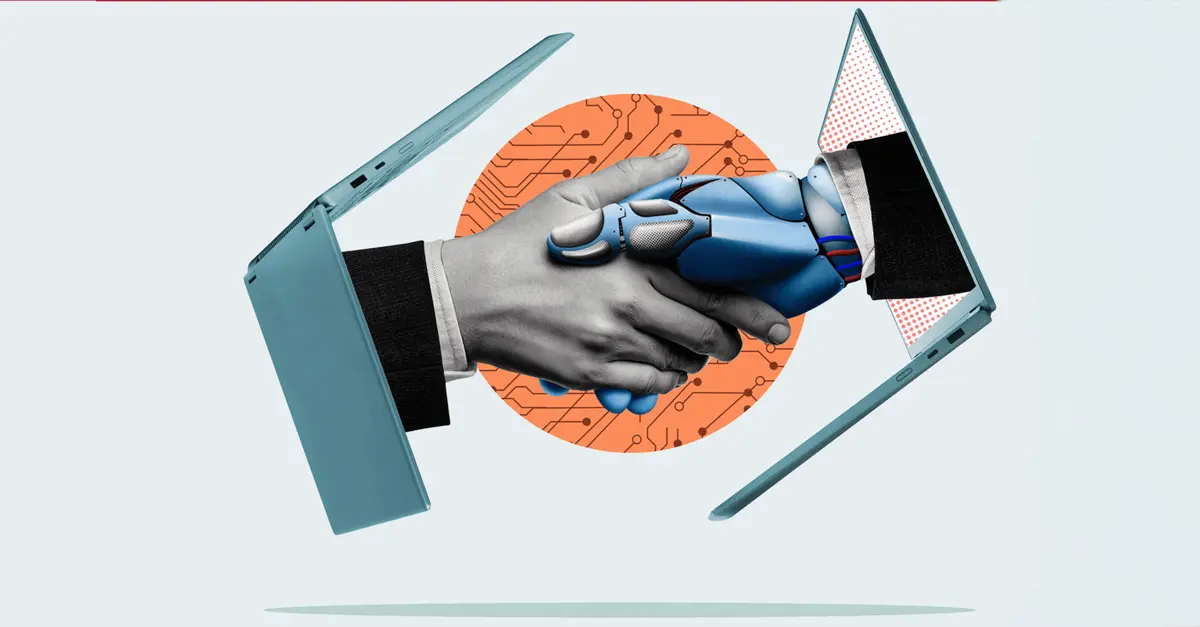
Corporate America is sounding the alarm on AI-driven workforce reductions, with executives across banking, tech, automotive, and retail openly warning that artificial intelligence is reshaping their organizations. JPMorgan Chase managers have been told to avoid hiring as the firm deploys AI, Ford CEO Jim Farley warned AI will "replace literally half of all white-collar workers," Salesforce cut customer support roles from 9,000 to 5,000, and Amazon CEO Andy Jassy predicted corporate headcount will shrink in coming years. Swedish fintech Klarna has already downsized its workforce by 40% through AI adoption.
Research from Stanford's Digital Economy Lab found that entry-level hiring in "AI-exposed jobs" has dropped 13% since large language models began proliferating, with software development, customer service, and clerical work most vulnerable. Goldman Sachs estimates 6–7% of U.S. workers could lose their jobs due to AI. However, the broader labor market data hasn't yet shown massive disruption — a Yale Budget Lab study found no "discernible disruption" from ChatGPT so far, and the New York Fed reported only 1% of services firms laid off workers because of AI in the past six months.
Economists caution that the current calm may be temporary. Gad Levanon of the Burning Glass Institute describes this as the "beginning of a multi-decade" transformation, noting there's "much more in the tank." While the World Economic Forum projects AI and automation could displace 92 million jobs by 2030, it also forecasts 170 million new roles in areas like AI development, research, and robotics. Physical jobs such as healthcare aides and construction workers remain largely shielded from disruption for now.

David De Cremer and Garry Kasparov argue in this Harvard Business Review article that AI should augment human intelligence rather than replace it. They highlight that AI is projected to add as much as $15.7 trillion to the global economy by 2030, but caution against the growing trend of organizations displacing human workers with intelligent machines across manufacturing, service delivery, recruitment, and finance.
The authors emphasize that people and AI bring different abilities and strengths to the table. Rather than viewing AI as a wholesale replacement for human workers — a trend that could make the workforce "totally unrecognizable" by 2040 — the real question organizations should be asking is how human intelligence can effectively collaborate with artificial intelligence to produce better outcomes than either could achieve alone.
