
A Reddit user in r/learnprogramming asks whether Human-Computer Interaction (HCI) courses will remain relevant as AI agents become more dominant in the tech industry. The post sparks a substantive discussion, with commenters largely agreeing that HCI is becoming more relevant, not less, but acknowledging that the field faces significant challenges in terms of recognition and job prospects.
Several key perspectives emerge. One commenter argues that HCI is foundational to innovation, connecting computer science to society and addressing critical questions about technology's impact — from social media addiction to brain-computer interfaces. A PhD candidate in HCI offers a more sobering view, noting that HCI jobs tend to get "cannibalized" by adjacent engineering fields once experimental technologies mature, leaving HCI practitioners without credit or clear career paths. Despite this, they emphasize HCI's adaptability and enduring relevance.
Practical career advice is also shared, stressing that standing out in the competitive HCI landscape requires real-world experience, meaningful internships, original projects, and relevant open-source contributions — not just coursework. The consensus is that HCI is evolving from traditional UI design toward designing human interactions with AI systems, focusing on intent, trust, control, and meaningful human autonomy in an AI-driven world.
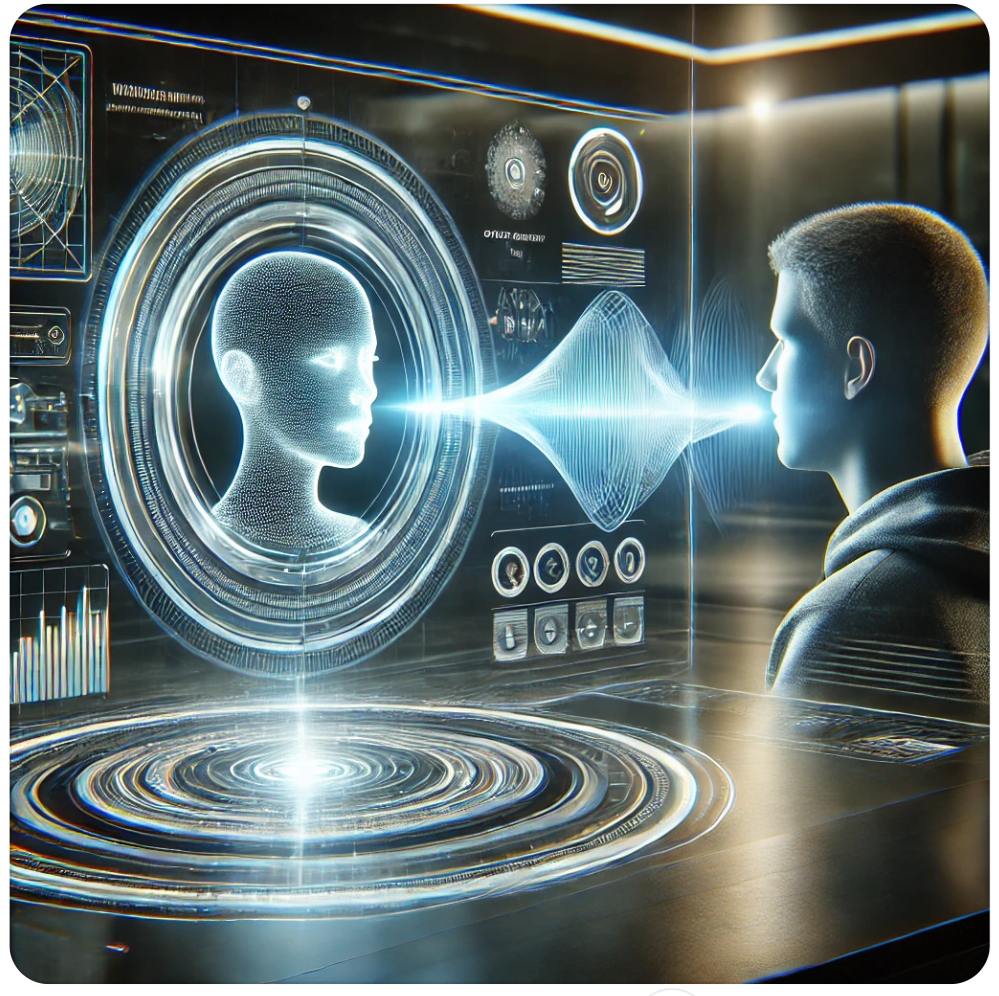
The author, a researcher working on augmented and virtual reality tools for molecular graphics, makes the case that Voice User Interfaces (VUIs) are rapidly approaching the level of sophistication needed for mainstream adoption. Drawing on a debate with a skeptical colleague and Daley Wilhelm's analysis of Star Trek's predictions for UX, the article examines why speech-based interaction has historically fallen short of science fiction's seamless vision — but argues that recent AI breakthroughs are closing the gap faster than most realize.
The piece identifies four technological pillars required for truly fluid VUIs: speech recognition, understanding, text processing, and speech synthesis. The author rates each on a 10-point scale, giving text processing a 9/10 (largely thanks to large language models like GPT-4), understanding an 8/10, speech recognition a 7/10 (citing models like OpenAI's Whisper V3), and speech synthesis a modest 5/10 as the weakest link still sounding somewhat robotic. The emergence of multimodal AI models that natively process sound, text, and other inputs within a single architecture is presented as a potential breakthrough that could unify these capabilities.
Despite the technical progress, the author acknowledges significant remaining barriers: lack of deep cross-system integration, privacy concerns around always-listening devices, and the challenge of diverse accents and noisy environments. Nevertheless, the conclusion is that computers are now more ready than humans for routine speech-based interaction, and that VUIs will become essential in contexts like AR/VR, accessibility, vehicles, and industrial settings where hands-free operation is critical.
Smashing Magazine shares an article by @MaximillianNYC exploring how the evolution of AI is transforming the computing paradigm and creating new opportunities for designers. The post highlights how the latest AI capabilities can reshape human-computer interaction beyond traditional conversational interfaces, pushing toward more intuitive user interfaces.
The tweet points to a deeper examination of what lies ahead for UX and interaction design as AI becomes more embedded in everyday computing, encouraging designers to think beyond chatbots and text-based interactions.