In November 2021, UNESCO's 193 Member States adopted the first global standard on AI ethics: the Recommendation on the Ethics of Artificial Intelligence. This landmark framework acknowledges the transformative opportunities AI presents — from healthcare diagnostics to personalized learning — while addressing profound ethical concerns such as bias amplification, climate degradation, and threats to human rights.
The Recommendation is built on four core values: respecting human dignity and rights, fostering just and peaceful societies, ensuring diversity and inclusiveness, and supporting environmental flourishing. It further outlines ten core principles grounded in a human-rights approach, including proportionality, safety and security, privacy and data protection, transparency and explainability, human oversight, sustainability, and fairness and non-discrimination. Each principle provides actionable guidance for the ethical development, deployment, and governance of AI systems.
Beyond values and principles, the Recommendation includes concrete policy action areas designed to help governments and stakeholders deal responsibly with AI's known and unknown impacts. UNESCO has also established a Global AI Ethics and Governance Observatory to serve as a resource for policymakers, regulators, academics, and civil society seeking solutions to AI's most pressing challenges. The full Recommendation is available in nine languages, underscoring its global reach and ambition.
Will Allen, an independent systems scientist and facilitator, shares practical reflections on how AI tools like GPT and Perplexity have become quiet thought partners in his collaborative and systems-oriented work. He outlines four key uses: exploring new research and perspectives, supporting systems framing and complexity, making writing less isolating, and testing how content lands with different audiences. Throughout, he emphasizes that these tools serve as scaffolding rather than substitutes for human judgment.
A central theme is the distinction between what AI can and cannot do in participatory, systems-facing settings. Allen provides a useful comparison table showing that while AI excels at rapid scanning, summarizing interviews, and generating draft outlines, it fundamentally cannot replicate relationship-building, facilitation, trust, or navigation of power dynamics — the core of collaborative research and evaluation work. He also raises important ethical considerations around data sensitivity, source attribution, and transparency when using AI-generated content.
The piece ultimately argues that AI works best when it stays in the background, helping practitioners show up more clearly and thoughtfully in the relational, human-centered work of collaboration, learning, and systems change. Allen's perspective is grounded in over 30 years of experience in sustainable development and natural resource management, lending practical credibility to his balanced take on AI adoption.

Microsoft highlights 10 significant scientific breakthroughs from its researchers in 2025, spanning quantum computing, AI-driven healthcare, materials science, and environmental monitoring. Among the standout achievements is Majorana 1, the world's first quantum processor powered by topological qubits, which promises to bring industrial-scale quantum computing within reach in years rather than decades. In life sciences, BioEmu-1 dramatically accelerates protein stability predictions, generating thousands of protein structures per hour to aid drug discovery, while MatterGen and MatterSim use generative AI to design novel materials by skipping traditional costly screening processes.
On the healthcare front, RAD-DINO, developed with Mayo Clinic, integrates AI with X-ray imaging to help radiologists analyze results faster, and FCDD improves early breast cancer detection by generating highly accurate MRI heatmaps that outperform other AI models. The Aurora foundation model delivers faster and more versatile atmospheric forecasting, predicting everything from weather to air pollution and tropical cyclones in seconds rather than hours.
The research extends into sustainability and novel computing paradigms as well. A seaweed-infused cement formulation developed with the University of Washington achieved a 21% lower global warming potential, while a deep learning model now enables flood mapping through cloud cover using radar satellite imagery. Microsoft's analog optical computer uses light to solve complex optimization problems at potentially a fraction of the energy cost of GPUs. Finally, the company addresses the dual-use risks of AI in biology, publishing the first tiered-access framework endorsed by a leading scientific journal to manage biosecurity information hazards.

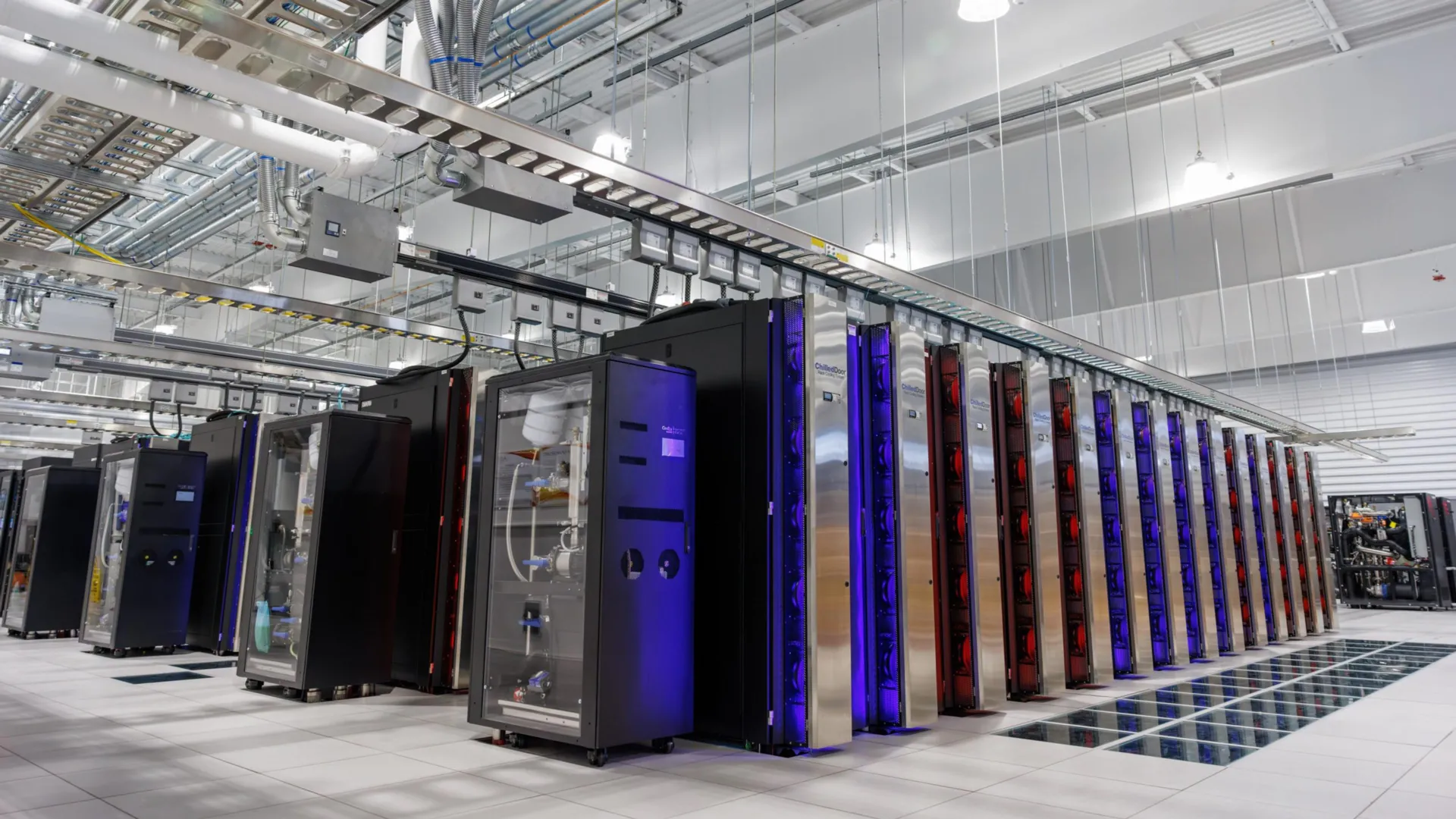
Researchers at Tufts University, led by professor Matthias Scheutz, have developed a neuro-symbolic AI system that combines traditional neural networks with human-like symbolic reasoning, achieving up to 100x reduction in energy consumption while significantly improving accuracy. The approach targets visual-language-action (VLA) models used in robotics, where conventional systems rely on brute-force trial and error and consume enormous amounts of electricity — AI and data centers already account for over 10% of U.S. electricity production.
In tests using the Tower of Hanoi puzzle, the neuro-symbolic system achieved a 95% success rate compared to just 34% for standard models, and on unfamiliar complex variations it still succeeded 78% of the time while traditional models failed entirely. Training time dropped from over a day and a half to just 34 minutes, and training energy was reduced to just 1% of conventional requirements. During operation, the system used only 5% of the energy needed by standard approaches.
The research, set to be presented at the International Conference of Robotics and Automation in Vienna, suggests that current LLM and VLA-based approaches may not be sustainable long-term. By incorporating structured reasoning and rule-based logic rather than relying solely on statistical pattern matching, neuro-symbolic AI offers a potentially more efficient, accurate, and sustainable foundation for future AI systems — addressing growing concerns about AI's strain on power infrastructure as data center energy demands are projected to double by 2030.