Harvard Business Review highlights how agentic AI is fundamentally reshaping the entrepreneurship landscape, giving startups a distinct competitive advantage. Startups are now deploying coordinated systems of AI agents capable of planning, acting, and adapting autonomously, which dramatically compresses the time and capital traditionally required to scale a company.
This shift represents a move beyond simple AI tool usage toward orchestrated, multi-agent systems that operate with significant autonomy. According to HBR, this AI-driven agility allows smaller companies to punch above their weight, potentially disrupting established players by accelerating key business processes that once demanded large teams and substantial funding.
Alex Lieberman, founder of Morning Brew, shares reflections on his latest venture — what he describes as "McKinsey for AI" — six months after launching. The business is 100% bootstrapped and, according to Lieberman, is the fastest-growing business he's ever started. He notes that it has pushed him harder than any previous endeavor.
The post teases a thread of lessons, musings, and reflections, opening with the observation that most engineering organizations are still 6 to 12 months behind in AI adoption. The full thread appears to explore the gap between AI's potential and how companies are actually implementing it, positioning his consultancy-style business as a bridge for that gap.
Harshil Mathur, CEO of Razorpay, argues that every founder and CEO should personally build at least one AI workflow they use on a daily basis. He contends that without this hands-on experience, leaders will inevitably either overestimate or underestimate AI's capabilities.
The advice underscores the importance of direct, practical engagement with AI tools rather than relying on secondhand assessments or abstract strategic discussions. By embedding AI into their own daily routines, founders can develop a grounded, realistic understanding of what AI can and cannot do — which is critical for making informed decisions about AI adoption across their organizations.
Andi Peng announces the mission of Humans&, a company focused on building AI that centers human interaction, collaboration, and coordination. She emphasizes the need to move beyond traditional task-centric training approaches and scale toward more advanced capabilities.
The post highlights three key areas of innovation the team is pursuing: long-horizon memory, multi-agent systems, and user understanding. The tweet is truncated, suggesting additional details about their approach or vision were shared in the full thread.
Joanne Chen of Foundation Capital presents findings from interviews with 25 companies about how AI is driving structural organizational change, not just individual productivity gains. The research reveals dramatic shifts: a 120-person engineering team planning to shrink to 25, expert-to-generalist ratios moving from 1:6 to a target of 1:100, and traditional roles like product, engineering, and design collapsing into fewer hybrid positions. The piece draws an analogy to factories switching from steam to electricity — the real gains came not from swapping power sources but from redesigning the entire system around the new technology.
The article identifies four human roles that remain essential in the AI-augmented org: chief accountability officers (executives who own outcomes), systems architects (who design human-agent collaboration), relationship experts (who maintain human-to-human trust), and validators (who review and approve agent outputs). Validator demand is expected to follow a bell curve, peaking in 2–4 years before declining as AI systems self-improve — but a critical "one-generation problem" emerges: if agents handle all junior work, the next generation of experts may never develop the foundational skills needed to validate AI output.
Chen maps four company archetypes along digital-vs-physical and product-vs-service axes, each facing distinct reorg patterns. Digital services firms face the most immediate pressure, as agents increasingly are the product. Seven startup opportunities emerge from these shifts, including tools for human system architects (like Arize), validator platforms (like Turing), agent-native infrastructure (like Sixtyfour), and AI-native services firms (like ConverzAI and Tessera Labs). The piece concludes that systems thinking — the ability to design workflows across humans and agents — is the most valuable and hardest-to-develop skill in the emerging organization.

David Sherry explores a question that has puzzled him: how do small, resource-constrained teams actually use AI collaboratively rather than in individual silos? He found his answer through a USV article about Tasklet, a tool whose tagline — "Put agents to work across your company" — resonated with his thinking. He sees small startups and independent teams adopting a mix of tools like Tasklet alongside custom internal tooling to build shared company-level intelligence.
Key takeaways from the article include practical advice on team-wide AI adoption: name agents with human-like names to encourage integration into workflows, add agents to regular communication channels so teams grow comfortable with them, and start with narrow, focused agents that broaden over time. Sherry also mentions Skydive as another interesting app in this space and emphasizes the importance of having an AI Champion — someone who owns and drives AI transformation within the team — to avoid stalling out on adoption.
Andrew Ng shares his talk from YC Startup School, focused on how to build AI startups. He highlights tips from AI Fund, his venture studio, on leveraging AI to build products quickly. The post invites feedback and links to the full talk, making it a useful resource for founders and builders looking to accelerate their AI-driven ventures.
David Cummings observes a notable shift in the SaaS landscape: multiple entrepreneurs he has spoken with recently are building all-in-one, AI-powered vertical SaaS applications and gaining significant traction. He contrasts this with the previous generation of SaaS companies, which were typically horizontal platforms that excelled in breadth but lacked industry-specific depth.
The post highlights an emerging trend where AI capabilities are enabling startups to create comprehensive, industry-specific solutions rather than broad, general-purpose tools. This signals a potential paradigm shift in how SaaS products are conceived and built, with vertical specialization combined with AI becoming the new competitive advantage.
Ann Miura-Ko, a well-known venture capitalist and co-founding partner at Floodgate, shares a link on X (formerly Twitter). The post from April 14, 2026 contains only a URL with no additional commentary or context, making it difficult to determine the specific topic or insight being shared without accessing the linked content directly.
Deedy introduces what he calls "Neolabs" — a term for pre-revenue, scale-stage startups focused on long-term AI breakthroughs rather than immediate commercialization. He compiles a comprehensive list of 50 such companies, positioning them as a distinct category in the AI startup ecosystem.
The post highlights a growing trend of ambitious AI ventures that prioritize fundamental research and breakthrough capabilities over near-term revenue, suggesting these Neolabs represent a significant and trackable segment of the artificial intelligence landscape. The accompanying image presumably details all 50 startups on the list.
At the 2023 MIT Digital Technology and Strategy Conference, ten startups showcased how they are leveraging artificial intelligence to drive digital transformation across diverse industries. The companies span a wide range of applications — from Cleanlab, which uses AI to find and fix errors in datasets, to Zapata, which focuses on industrial generative AI for solving enterprise-scale problems using both language and numerical models. Other notable startups include CoCoPIE, streamlining AI deployment on mobile and IoT devices; Hopara, creating affordable digital twins; and MontBlancAI, applying anomaly-detection algorithms to manufacturing.
The lineup highlights the breadth of AI's current impact: Covariance builds competitive intelligence profiles by combining first-party, third-party, and public data; Einblick uses generative AI to help users write code and build models collaboratively; serviceMob provides AI-driven analytics for customer service operations; TechNext uses machine learning to assess emerging technology investment opportunities; and Wise Systems improves last-mile delivery routing. Together, these startups illustrate how small, agile companies are tackling significant challenges in data quality, logistics, manufacturing, and business intelligence by building on the latest advances in AI and machine learning.

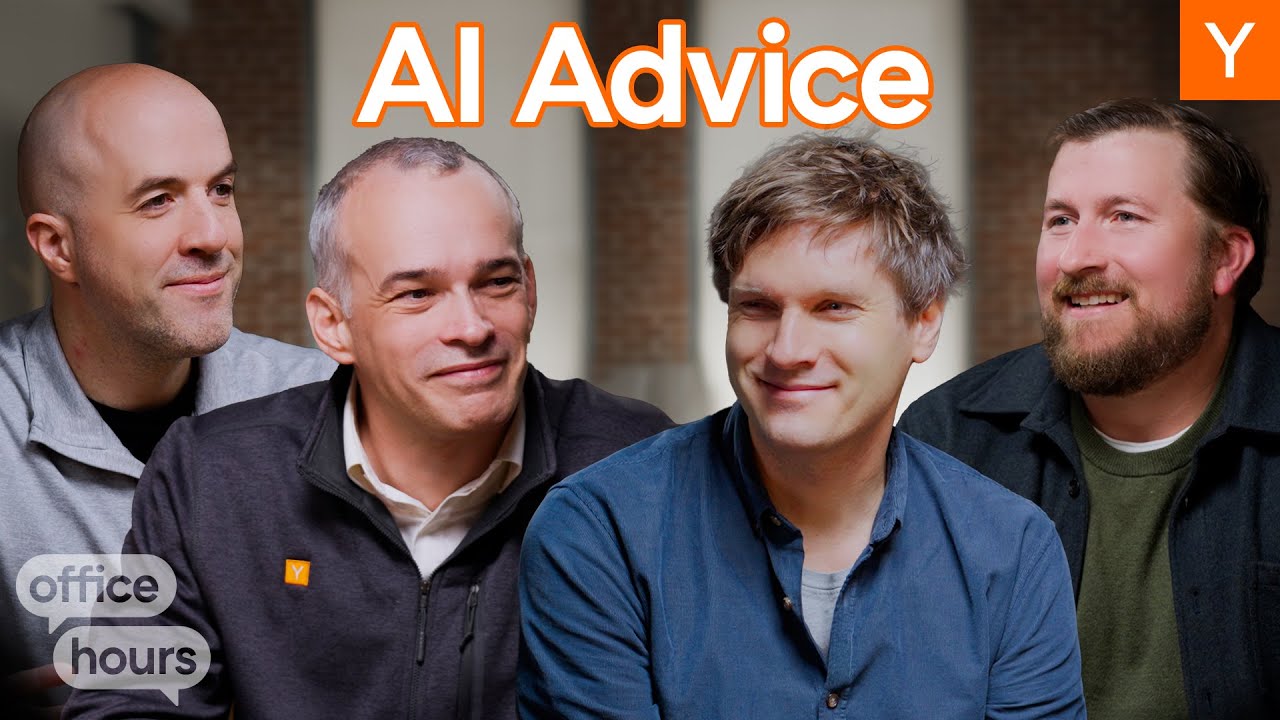
Y Combinator partner Diana Hu discusses the concept of building an AI-native company in an episode of Startup School. The core argument is that AI is no longer just a productivity tool — it should function as the operating system that a company runs on, fundamentally changing how companies are structured and built.
The post signals a shift in YC's thinking about startup architecture, emphasizing that founders should design their organizations around AI from the ground up rather than layering AI onto traditional company structures. This perspective reflects a broader trend in the startup ecosystem where AI-native design is becoming a foundational principle rather than an afterthought.
Steijnpelle argues that small businesses have been overlooked in the AI landscape, suggesting there is a significant opportunity to build a great AI company focused on serving this segment. The post includes a link and an image, implying further context about the idea or a specific product/company pursuing this vision.
The core thesis is that while AI development has largely targeted enterprises and consumers, the small business market remains underserved — representing a potentially large and untapped opportunity for an AI-native company to address their unique needs.
Y Combinator presents a resource from its Startup Library on how to use AI in your startup. While the full content of the page was not available in the saved version, the resource is part of YC's curated library of advice for founders. It likely covers practical strategies for integrating artificial intelligence into early-stage companies, including guidance on where AI can add the most value, common pitfalls to avoid, and how startups can leverage AI tools effectively to build better products and gain competitive advantages.
As part of YC's broader educational library, this piece is aimed at startup founders and teams looking to understand and adopt AI technologies in a meaningful way rather than simply following hype. The resource reflects YC's ongoing emphasis on helping founders make pragmatic, high-impact decisions about emerging technologies.
A product manager with 3–4 years of experience in AI products shares a candid critique of the "AI Product Manager" role as it exists today, particularly in the Indian startup ecosystem. The author argues that many positions marketed as AI PM roles are actually implementation and customer success roles disguised with an AI label. In these roles, the core AI platform is already built by engineering teams, and the PM's job reduces to configuring prompts, designing conversation flows, and deploying the system for enterprise clients — not shaping the product's roadmap or working on core AI capabilities.
The post highlights a frustrating career trap: after spending one or two years in such a role, professionals find themselves stuck. They lack the ML engineering background that companies building serious AI infrastructure demand, yet their experience is too AI-focused for generic PM roles. The author also challenges the prevailing hype, estimating that AI improves enterprise workflow efficiency by roughly 20–25 percent — far from the transformational claims commonly made. Many startups, the author notes, are essentially API wrappers built on top of OpenAI or Anthropic, yet hiring expectations still reflect an older era when AI products required deep ML research expertise.
Commenters largely validate the observations, with several noting that the implementation-vs-core-product distinction is a longstanding pattern in PM hiring that AI has merely amplified. Others draw parallels to previous hype cycles around mobile, blockchain, and growth PM titles, predicting that "AI PM" will eventually dissolve into standard product management as the technology matures. The consensus advice: before accepting an AI PM role, carefully evaluate whether the position involves building and evolving the core product or merely deploying it for clients.
This article from The VC Corner examines how AI-powered small teams are fundamentally reshaping the startup landscape, challenging the traditional assumption that scaling requires large workforces. It highlights remarkable examples like Midjourney reaching $200M ARR with just 10 people, Cursor hitting $100M ARR in 21 months with 20 employees, and BuiltWith generating $14M/year with a single employee. The piece references Sam Altman's prediction that one-person unicorns will emerge, noting that solo founders already account for 35% of the 2024 startup class according to Carta.
The article balances optimism with pragmatism, outlining significant challenges that lean teams still face: scalability limitations, employee burnout (72% of startup founders report mental health issues), skill gaps, and the threat of larger competitors who can replicate features or acquire smaller rivals. Certain industries like biotech, manufacturing, and cybersecurity remain inherently resistant to ultra-lean models. The piece advocates for a hybrid model that combines AI efficiency with strategic human expertise, citing McKinsey research showing companies blending AI with human decision-making are 20% more successful. Founders are advised to balance lean efficiency with sustainable growth, while investors should evaluate whether a startup's team structure realistically matches its scaling ambitions.

A growing wave of AI-enabled solopreneurs is building and scaling companies without traditional teams, leveraging AI coding tools, agents, and automation to replace roles that once required dedicated hires. Maor Shlomo built Base44, a vibe-coding platform, in four months as a solo founder, generating nearly $1.5 million in revenue within a month before selling to Wix for $80 million. Dana Snyder, with no technical background, used Replit's AI coding tools to build a consulting platform for nonprofits, targeting the 93% of U.S. nonprofits too small to afford human consultants. U.S. Census data shows 29.8 million non-employer companies generating roughly $1.7 trillion in revenue, with more recent estimates suggesting the number of solopreneurs now exceeds 41 million.
However, the article highlights significant limits to the solo founder model. Industries with complex compliance, physical supply chains, or enterprise sales still require human oversight at too many points. NYU Stern professor J.P. Eggers notes that AI struggles to substitute for deep domain expertise and specialized judgment, and monthly AI costs at lean startups can reach hundreds of thousands of dollars — approaching the salaries they replace. Shlomo himself experienced the toll firsthand, setting alarms every two to three hours overnight to monitor servers, and ultimately sold Base44 because scaling globally required marketing capabilities he lacked. The broader concern is that as fewer people create more value, startup wealth could concentrate among an increasingly small number of founders, raising questions about how large these solo-run businesses can realistically grow.

This IBM article explores how generative AI is transforming small business entrepreneurship, with more than 20% of new businesses now incorporating gen AI technologies according to a Gusto report. Carnegie Mellon professor and entrepreneur Sean Ammirati describes gen AI as a potential "digital co-founder" — not a final decision-maker, but a helpful partner that assists across ideation, validation, and scaling. His students demonstrated dramatically accelerated progress in building startups when equipped with AI tools, accomplishing in a semester what previously took much longer.
The piece outlines several practical applications for entrepreneurs: content generation for marketing campaigns, social media, and business documents; research assistance through LLMs for exploring complex questions about markets, regulations, and competition; and application-layer innovation where specialized tools built on top of foundation models add domain-specific value. Ammirati cautions that LLMs have limitations, including hallucinations, and should be treated as thought starters rather than definitive advisors — but notes that reducing a 10-hour research project to one hour represents meaningful value.
The article highlights a growing ecosystem of "AI-native" startups and tools being built on top of LLMs, citing Sequoia Capital's observation that what were once dismissed as "LLM wrappers" have evolved into "cognitive architectures." Ammirati's own startup, Growth Signals, exemplifies this trend by helping executives and researchers translate market and technology signals into actionable innovation concepts using AI-powered competitive analysis and agent-based research capabilities.

This Harvard Business Review article by Jeffrey P. Shay, Donna Kelley, Mahdi Majbouri, and Thomas H. Davenport explores how ambitious entrepreneurs are leveraging AI to scale their startups, competing effectively against much larger, well-funded companies. The authors highlight the case of Anysphere's Cursor, an AI coding assistant launched in 2022 by a lean team of developers. Despite limited resources, Cursor quickly began competing with tools from major players like OpenAI and GitHub, demonstrating that small teams can achieve outsized results when powered by AI.
The article argues that AI is becoming a critical equalizer for startups, enabling them to drive growth, innovation, and efficiency without the massive headcounts and budgets traditionally required. While the full content is paywalled, the piece is positioned around themes of entrepreneurial business strategy, scaling ventures, and data-driven decision-making, offering insights into how founders can strategically adopt AI to punch above their weight in competitive markets.

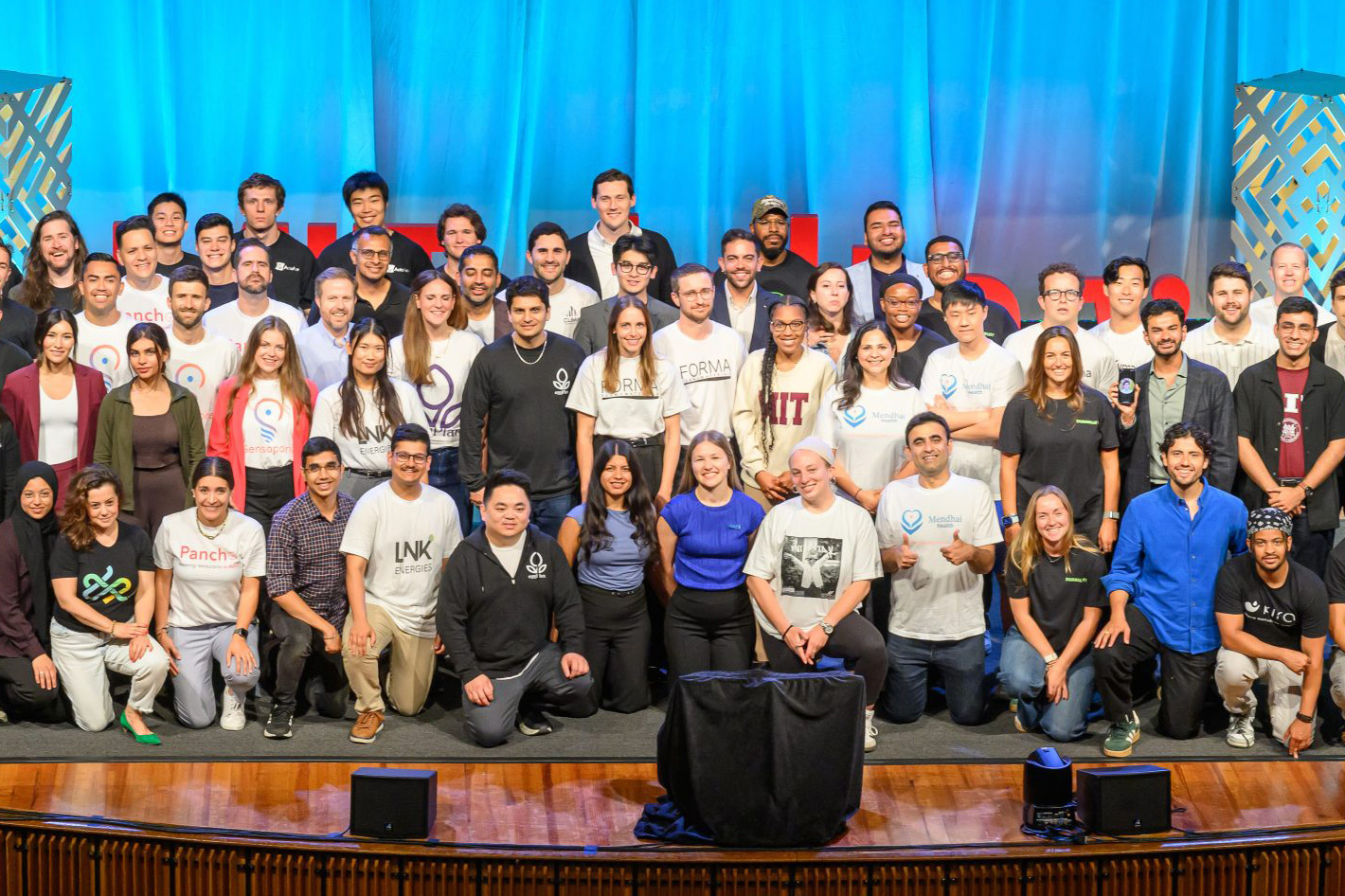
MIT's Martin Trust Center for MIT Entrepreneurship is navigating the AI revolution with a nuanced approach: while AI tools are reshaping how startups are built, the fundamentals of entrepreneurship remain unchanged. Through its delta v summer accelerator program, the Trust Center encourages students to leverage AI for coding, brainstorming, drafting presentations, and learning about new industries, but emphasizes that talking to customers and validating ideas in the real world remain irreplaceable. The center's generative AI app, Jetpack, guides users through the 24 steps of disciplined entrepreneurship, suggesting customer segments, business models, and product plans — but positions its outputs as first drafts rather than final answers.
The cohort's experiences illustrate both AI's power and its pitfalls. Cognify, an AI-native company founded by MBA candidate Murtaza Jameel, uses AI tools across all processes from ideation to programming, while Mendhai Health co-founder Aanchal Arora cautions that overreliance on AI can undermine customer understanding. Trust Center leaders note that large language models, built on averages, can be less effective for targeting specific demographics — a critical shortcoming for entrepreneurs trying to identify niche markets. Despite the hype around AI agents and automation, founders in the program consistently pointed to the human elements — mentorship, networks, and advisor relationships — as what makes delta v truly valuable.