This guide from AI @ Work offers a practical, intentionally selective overview of AI tool categories suited for small, non-technical teams. Rather than listing specific products, it categorizes tools into four areas: general-purpose AI assistants for drafting and summarizing, writing and editing tools for improving communication clarity, research and summarization tools for handling information overload, and meeting and note tools for capturing action items and reducing note-taking burden.
The page emphasizes a minimalist approach to AI adoption, advising teams to start with one general-purpose tool and only add specialized tools when a clear gap appears. It explicitly warns against premature adoption of automation platforms, workflow builders, and multi-tool integrations, arguing these add unnecessary complexity before teams have established patterns. The recommended testing process is straightforward: pick one real task, try one tool, review the output together, and decide whether it helped.
A key theme throughout is that AI tools should serve as thinking aids, drafting assistants, and clarity tools — not replacements for people or entire workflows. The bottom line: small teams succeed not by adopting more AI tools, but by using the right few, thoughtfully, ensuring tools reduce friction without requiring technical expertise.
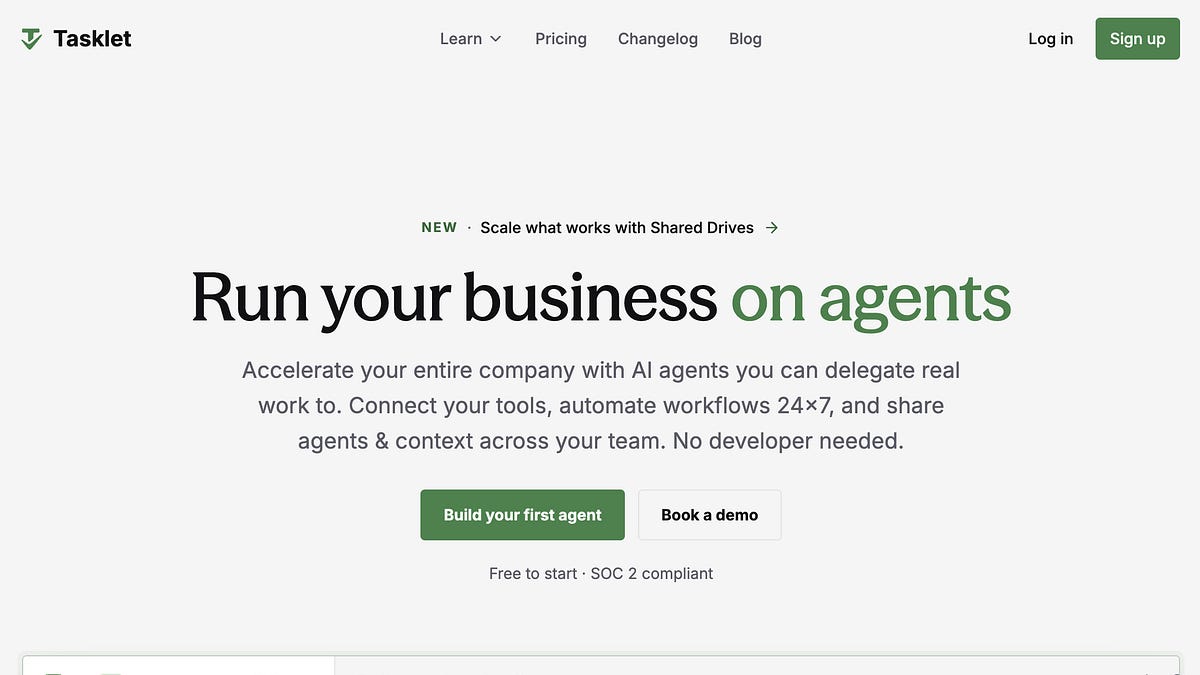
David Sherry explores a question that has puzzled him: how do small, resource-constrained teams actually use AI collaboratively rather than in individual silos? He found his answer through a USV article about Tasklet, a tool whose tagline — "Put agents to work across your company" — resonated with his thinking. He sees small startups and independent teams adopting a mix of tools like Tasklet alongside custom internal tooling to build shared company-level intelligence.
Key takeaways from the article include practical advice on team-wide AI adoption: name agents with human-like names to encourage integration into workflows, add agents to regular communication channels so teams grow comfortable with them, and start with narrow, focused agents that broaden over time. Sherry also mentions Skydive as another interesting app in this space and emphasizes the importance of having an AI Champion — someone who owns and drives AI transformation within the team — to avoid stalling out on adoption.