Paul Liang announces a new course at MIT called "How to AI (Almost) Anything", designed for the current AI era. The course name is inspired by two seminal MIT Media Lab courses: "How to Make Almost Anything" (focused on design and fabrication) and "How to Grow Almost Anything" (focused on synthetic biology). Liang positions this new class as the natural next step, reflecting the shift into the age of AI.
At the 2023 MIT Digital Technology and Strategy Conference, ten startups showcased how they are leveraging artificial intelligence to drive digital transformation across diverse industries. The companies span a wide range of applications — from Cleanlab, which uses AI to find and fix errors in datasets, to Zapata, which focuses on industrial generative AI for solving enterprise-scale problems using both language and numerical models. Other notable startups include CoCoPIE, streamlining AI deployment on mobile and IoT devices; Hopara, creating affordable digital twins; and MontBlancAI, applying anomaly-detection algorithms to manufacturing.
The lineup highlights the breadth of AI's current impact: Covariance builds competitive intelligence profiles by combining first-party, third-party, and public data; Einblick uses generative AI to help users write code and build models collaboratively; serviceMob provides AI-driven analytics for customer service operations; TechNext uses machine learning to assess emerging technology investment opportunities; and Wise Systems improves last-mile delivery routing. Together, these startups illustrate how small, agile companies are tackling significant challenges in data quality, logistics, manufacturing, and business intelligence by building on the latest advances in AI and machine learning.

Gracy Chen, associated with Bitget, shares a chart she encountered at an MIT event from an NBER working paper titled Artificial Intelligence and the Labor Market. The chart examines how exposed different jobs are to AI disruption across wage levels, highlighting the varying degrees of vulnerability depending on income brackets.
The post points to ongoing academic research into AI's impact on employment, suggesting that the relationship between wage levels and AI exposure is a nuanced and important topic for understanding the future labor market. By sharing this research, Chen draws attention to the intersection of AI advancement and workforce economics.
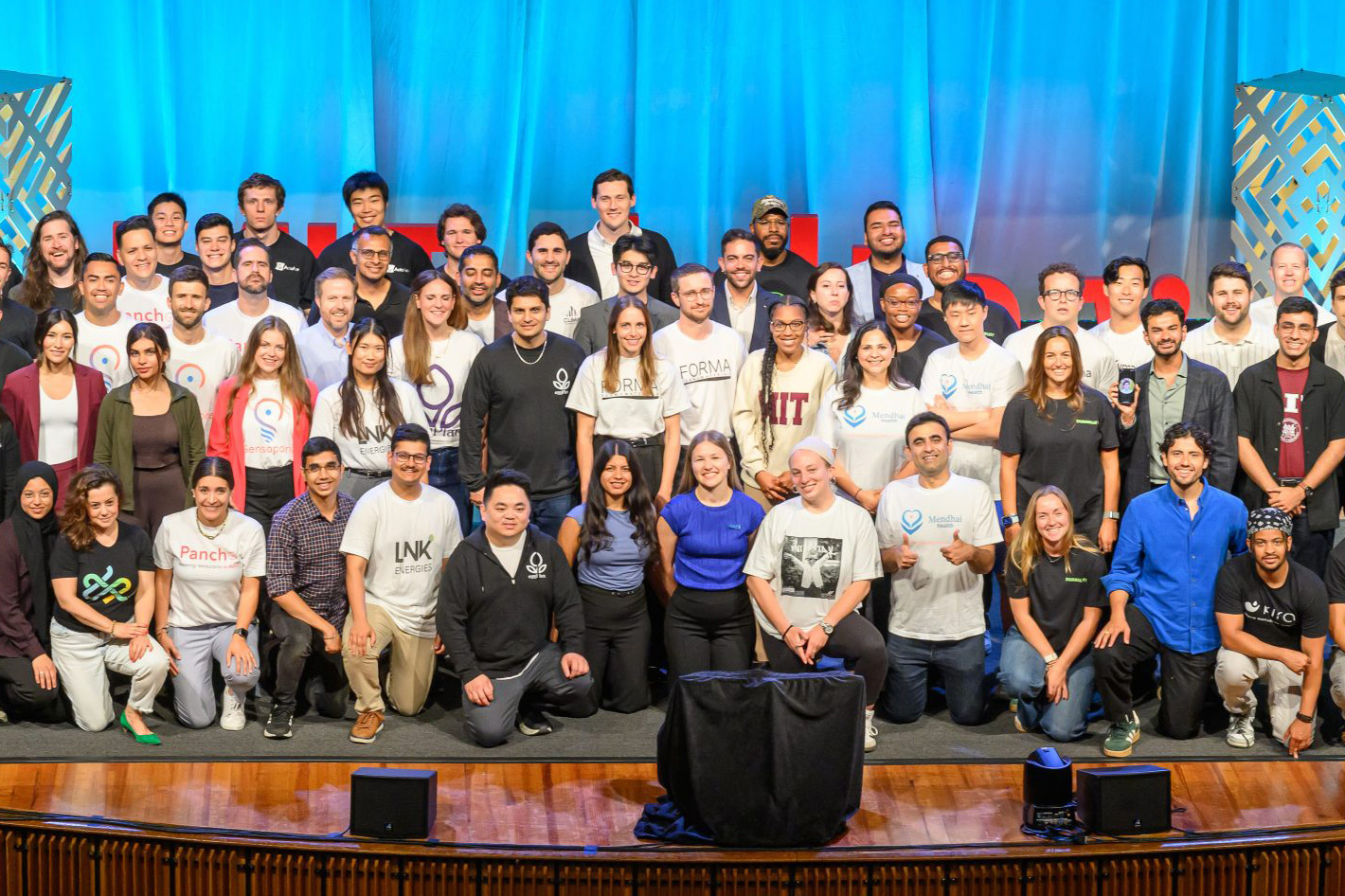
MIT's Martin Trust Center for MIT Entrepreneurship is navigating the AI revolution with a nuanced approach: while AI tools are reshaping how startups are built, the fundamentals of entrepreneurship remain unchanged. Through its delta v summer accelerator program, the Trust Center encourages students to leverage AI for coding, brainstorming, drafting presentations, and learning about new industries, but emphasizes that talking to customers and validating ideas in the real world remain irreplaceable. The center's generative AI app, Jetpack, guides users through the 24 steps of disciplined entrepreneurship, suggesting customer segments, business models, and product plans — but positions its outputs as first drafts rather than final answers.
The cohort's experiences illustrate both AI's power and its pitfalls. Cognify, an AI-native company founded by MBA candidate Murtaza Jameel, uses AI tools across all processes from ideation to programming, while Mendhai Health co-founder Aanchal Arora cautions that overreliance on AI can undermine customer understanding. Trust Center leaders note that large language models, built on averages, can be less effective for targeting specific demographics — a critical shortcoming for entrepreneurs trying to identify niche markets. Despite the hype around AI agents and automation, founders in the program consistently pointed to the human elements — mentorship, networks, and advisor relationships — as what makes delta v truly valuable.