Harvard Business Review shares a provocative stance on the limitations of generative AI in strategic decision-making. The post highlights a linked article arguing that generative AI is not the "strategic oracle" many claim it to be, pushing back against the hype surrounding AI's role in business strategy. The message challenges the prevailing narrative that AI tools can reliably guide high-level strategic choices, suggesting organizations should temper their expectations accordingly.
Tomasz Opasinski, a veteran designer with over 20 years of experience in entertainment advertising, details how he replaced his traditional creative workflow with a fully generative AI approach using Adobe Firefly and Adobe Photoshop to design posters for the 22nd Kinoteka Polish Film Festival. Instead of hand-sketching concepts, he went straight to prompting in Firefly, treating prompt refinement as a form of iterative sketching. Six hours of prompt exploration yielded hundreds of images—far more than traditional sketching would have produced in the same timeframe—and he notes that he won't go back to using sketches for ideation.
The process transformed each phase of his workflow. During pre-production, generative outputs eliminated the need for written descriptions to accompany concepts, since clients could evaluate highly specific images directly. He used Generative Expand in Photoshop to test compositions at different aspect ratios for web, print, and outdoor formats. From hundreds of generated images, he narrowed selections to 77 for client review and mocked up 17 as posters—far more than the typical three or four. The client ultimately chose two designs, each evoking a distinct emotional response: a flying multi-lens camera symbolizing past and future, and a white origami camera with museum-quality aesthetics for invitations.
Opasinski also highlights practical challenges: AI-generated images lack individual layers, requiring masking and pixel-filling; aspect ratio changes can alter the composition's narrative; and images need upscaling for print resolution. Despite these considerations, generative AI significantly shortened his concept-to-completion timeline and provided unexpected creative directions he wouldn't have discovered through traditional methods.

Stanford CRAFT presents a resource exploring the role of AI in storytelling, featuring curated materials including videos and articles that examine whether AI tools like ChatGPT can produce compelling creative writing. The resource challenges readers to distinguish between human-written and AI-generated short stories, while also demonstrating how AI can be used to create animated story videos.
The lesson focuses on key questions around creativity, authenticity, and originality when AI enters the storytelling process. It asks learners to weigh the trade-offs of AI making content creation easier against potential losses in voice and genuine creative expression. The resource introduces the concept of Generative Artificial Intelligence (GAI) — AI capable of producing new text, images, music, and voice — and positions it as a tool that may eventually write compelling stories, though it acknowledges that human storytelling still holds the edge today.

Researchers from Perplexity and academic collaborators conducted a field study comparing a conversational AI assistant with an autonomous AI agent, finding that AI agents don't merely accelerate knowledge work — they fundamentally change its nature. The study highlights a key distinction: a conversational assistant returns information quickly (summaries, links) that a user must then act on manually, while an autonomous agent delivers completed work products such as built spreadsheets, drawn charts, and draft memos, albeit with a longer processing time.
The research, published in Harvard Business Review, suggests that AI agents broaden the scope of knowledge work by shifting what counts as a task boundary. Rather than simply helping workers find information faster, agents take on multi-step workflows end to end. This has significant implications for competitive strategy, change management, and how organizations think about productivity and the evolving role of human judgment in an AI-augmented workplace.

Scott Barry Kaufman, a psychologist known for his work on creativity and intelligence, shares a link to research indicating that generative AI is making human creative output more uniform. The post highlights real-world evidence suggesting that as people increasingly rely on AI tools for creative tasks, the diversity and originality of their output diminishes, leading to greater homogeneity. This finding carries significant implications for debates around AI's role in creative industries and whether these tools enhance or constrain human imagination.
This Forbes Technology Council roundup presents 20 real-world use cases for large language models (LLMs) across diverse industries, contributed by technology executives and leaders. The examples span healthcare, cybersecurity, customer service, software development, pharmaceuticals, marketing, and more. Notable cases include OpenAI's collaboration with a healthcare provider that reduced diagnostic errors by 20%, GitHub Copilot enhancing developer productivity with real-time coding suggestions, Ricoh cutting technician onboarding from 10 weeks to two using a specialized LLM, and a pharmaceutical company saving days to weeks of manual work by automating scientific literature curation.
A recurring theme across the contributions is that success with LLMs depends not just on choosing the right model, but on rigorous data management, domain-specific fine-tuning, and thoughtful workflow integration. Several contributors emphasize that LLMs work best when they augment human capabilities rather than replace them — freeing teams to focus on higher-impact, strategic work. The article also highlights that organizations of all sizes can benefit, as many of these use cases leverage publicly available models rather than requiring massive proprietary training datasets. From automating claims processing to generating test data, the examples collectively illustrate that LLMs deliver the most value when applied to well-defined, labor-intensive processes where language understanding and data synthesis are key bottlenecks.

This ICLE issue brief by Eric Fruits and Kristian Stout synthesizes the empirical evidence on AI's effects on productivity, labor markets, and competition through early 2026. The core finding is a striking gap between micro-level and macro-level results: controlled experiments consistently show 15% to 50%+ productivity gains across writing, customer support, software development, accounting, law, and translation, with disproportionately large benefits for lower-skilled workers producing a "skill compression" effect. Yet aggregate labor-market indicators through 2024–2025 show limited disruption — no economywide job loss or wage decline — with adjustment occurring through task reallocation rather than mass displacement. Where effects do appear, they concentrate in entry-level segments of highly exposed occupations, while senior employment remains stable.
The authors attribute the disconnect between micro gains and macro flatness to the "productivity J-curve" — the phenomenon where general-purpose technologies require extensive organizational redesign, training, and complementary investment before gains surface in aggregate statistics — as well as measurement limitations in national accounts that understate quality improvements and time savings. Macroeconomic forecasts range widely, from Acemoglu's conservative estimate of less than 0.66% TFP growth over a decade to Goldman Sachs projections of 7% global GDP gains, with the divergence driven by differing assumptions about task coverage, adoption speed, and complementary investment rather than conflicting data.
On competition and policy, the brief argues that AI lowers minimum viable scale in downstream markets, facilitating entry by startups and small firms even as upstream model development remains concentrated. Evidence shows increased business formation by first-time founders with smaller teams post-ChatGPT. The authors conclude that the literature offers limited support for regulatory approaches premised on widespread displacement or durable monopoly power, instead advocating targeted enforcement of existing law, reduced regulatory fragmentation, and investment in skills and infrastructure.

A webinar hosted by AI at Wharton brought together researchers from Boston University, the Technical University of Munich, and Purdue University to explore how generative AI is reshaping artistic and creative production. Yannick Exner's research found that AI-generated visual marketing content can match or even outperform human-made images in perception, social media engagement, and click-through rates. Ankit Sisodia presented methods for using deep machine learning to identify appealing product design attributes and generate new products that resonate with consumers. Dokyun Lee's study of over 4 million artworks showed that text-to-image AI enhanced creative productivity by 25% and increased art's perceived value by 50% over time, positioning AI as a powerful brainstorming tool for artists.
The panelists also debated the long-term implications of AI for human creativity. While they acknowledged AI's vast potential, Exner raised concerns about diminishing returns if people rely too heavily on AI models trained on existing human knowledge, potentially eroding the novel thinking that feeds those models. Lee drew a parallel to the invention of photography, which didn't kill art but transformed it, suggesting AI may have a similar effect on the creative landscape. The discussion highlighted both the promise and the tension inherent in integrating AI deeply into creative workflows.
At the 2023 MIT Digital Technology and Strategy Conference, ten startups showcased how they are leveraging artificial intelligence to drive digital transformation across diverse industries. The companies span a wide range of applications — from Cleanlab, which uses AI to find and fix errors in datasets, to Zapata, which focuses on industrial generative AI for solving enterprise-scale problems using both language and numerical models. Other notable startups include CoCoPIE, streamlining AI deployment on mobile and IoT devices; Hopara, creating affordable digital twins; and MontBlancAI, applying anomaly-detection algorithms to manufacturing.
The lineup highlights the breadth of AI's current impact: Covariance builds competitive intelligence profiles by combining first-party, third-party, and public data; Einblick uses generative AI to help users write code and build models collaboratively; serviceMob provides AI-driven analytics for customer service operations; TechNext uses machine learning to assess emerging technology investment opportunities; and Wise Systems improves last-mile delivery routing. Together, these startups illustrate how small, agile companies are tackling significant challenges in data quality, logistics, manufacturing, and business intelligence by building on the latest advances in AI and machine learning.

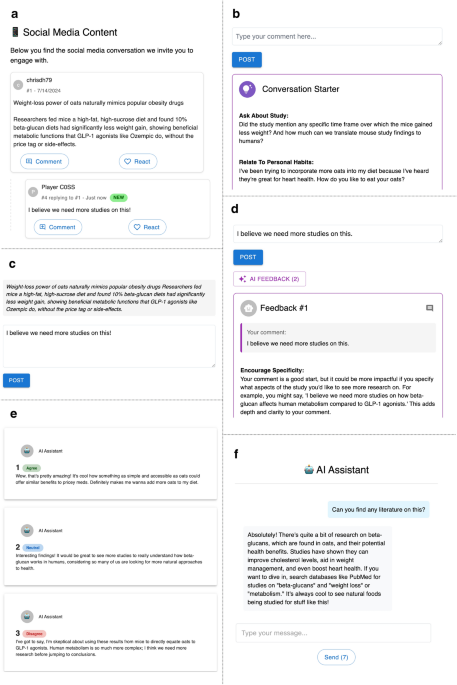
A controlled experiment involving 680 U.S. participants investigates how four distinct generative AI tools—Chat assistance, Conversation Starters, Feedback on drafts, and reply Suggestions—affect both content producers and consumers in a realistic social media environment. Participants were organized into groups of five and discussed three topics (dogs vs. cats, health benefits of oats, and universal basic income) across different experimental conditions. The study reveals a critical duality: while AI tools increase user engagement, content volume, and participation equality, they simultaneously decrease perceived quality and authenticity of discussions. Consumers rated AI-assisted content as more "robotic" and "generic," and all AI treatments significantly increased dislike reactions compared to the control group.
The research uncovers nuanced usage patterns across tools and topics. Chat was widely adopted (94.4%) with users adapting their prompts to context—casual queries for lighter topics, fact-checking for scientific discussions, and political engagement for divisive subjects. Conversation Starters improved participation equality but were often misaligned with user intent, with 27.5% of users diverging entirely from AI suggestions. Feedback was most valued in high-stakes discussions requiring argumentation and credibility, while Suggestions showed a notable bias toward agreeing stances in controversial topics. Critically, no single AI tool improved both producer and consumer experiences simultaneously.
Based on these findings, the authors propose four design principles for integrating AI into social media: transparent disclosure of AI-generated content, user-focused personalization, context-sensitivity accounting for topic and intent, and intuitive user interfaces. The study represents one of the first direct experimental tests of whether generative AI can genuinely elevate online discussions, with evidence suggesting it more likely amplifies low-quality interaction and creates negative spillover effects on conversations—even affecting users who don't use the AI tools themselves.
This article from the KM Institute explores how AI-driven knowledge management transforms the traditional knowledge lifecycle—creation, capture, organization, sharing, and reuse—by embedding intelligence directly into daily workflows. Unlike conventional KM systems that rely on manual documentation and static taxonomies, AI-driven KM leverages machine learning, natural language processing, and generative AI to continuously learn from content, context, and user behavior. The piece highlights voiceover AI as a notable enabling technology that treats spoken knowledge as a first-class asset, expanding KM beyond text into audio-first environments.
A central argument is that AI does not replace knowledge workers but fundamentally redefines their roles. Workers shift from being knowledge holders and content producers to becoming knowledge stewards, sense-makers, and strategic contributors. With AI handling routine retrieval and content generation, humans focus on validation, contextual judgment, cross-domain interpretation, and ethical oversight. The article cites McKinsey research noting that knowledge workers spend nearly 20% of their time just searching for information—a friction point AI-driven KM directly addresses.
The piece also emphasizes that AI-driven KM introduces new governance and risk considerations, including bias in AI-generated insights, over-reliance on automation, and data privacy concerns. Strong human oversight and transparent governance frameworks are presented as essential for building trust and realizing long-term value from these systems.
This Harvard Business Review article by Maryam Alavi and George Westerman explores how generative AI is poised to transform knowledge work across industries. The authors note that tools like ChatGPT have achieved unprecedented adoption rates, reaching 100 million monthly users faster than any internet application in history. Companies in professional services, health care, and finance are investing billions to harness the efficiency and productivity gains these technologies promise.
The article emphasizes that generative AI can be a significant boon for knowledge-intensive firms, but only when deployed in the right way. New AI-enabled tools are rapidly emerging to assist and augment knowledge work, suggesting that organizations need to be strategic about adoption rather than simply implementing the technology for its own sake. The piece covers themes spanning automation, data management, and enterprise computing, positioning generative AI as a foundational shift in how knowledge workers operate.

This conference paper by Chutisant Kerdvibulvech and Xudong Jiang, presented at HCII 2025, explores how generative AI is reshaping Human-Computer Interaction (HCI) across four key dimensions: user interaction, AI-driven emotional recognition, ethical considerations, and future directions. The authors argue that while traditional HCI frameworks relied on rule-based systems, modern AI-driven approaches incorporate dynamic learning, natural language processing, and emotion recognition to create more adaptive, intuitive, and personalized user experiences.
The paper highlights both the promise and the challenges of integrating AI into HCI. While AI significantly enhances usability and accessibility, the authors emphasize that issues such as algorithmic bias, data privacy, and ethical transparency must be carefully addressed to ensure responsible implementation. The work is published as part of the Lecture Notes in Computer Science series (vol. 15821) by Springer, and was partially supported by the National Institute of Development Administration (NIDA) in Thailand. The paper draws on a broad range of references spanning healthcare AI, metaverse learning, multimodal emotion recognition, and AI chatbot effectiveness, positioning it as a survey-style contribution mapping the evolving landscape of AI-enhanced HCI.

Marty Cagan and Marily Nika outline what makes AI product management distinct from conventional product management, framing it through the lens of four critical product risks: feasibility, usability, value, and viability. They argue that just as "Mobile PM" was once a specialized skill that eventually became table stakes, AI product management will soon be expected of all product managers. The article focuses specifically on AI-powered applications rather than underlying infrastructure, drawing a parallel to the platform-versus-experience product distinction.
The authors detail how each risk category intensifies with AI. Feasibility risk is heightened because generative AI is probabilistic, not deterministic — making training data quality, error rates, and appropriate use-case matching paramount. Usability risk demands new approaches to transparency, explainability, and trust-building in the user experience. Value risk requires product managers to ensure AI features deliver genuine incremental benefit rather than serving as marketing checkboxes. Viability risk encompasses unit economics (still uncertain for many AI products), data provenance and copyright concerns, legal liability for probabilistic outputs, and ethical considerations around bias, hallucinations, and misuse by bad actors. The piece underscores that these viability questions fall squarely on the AI product manager's shoulders, making deep knowledge of users, data, business context, and technology more critical than ever.

This IBM article explores how generative AI is transforming small business entrepreneurship, with more than 20% of new businesses now incorporating gen AI technologies according to a Gusto report. Carnegie Mellon professor and entrepreneur Sean Ammirati describes gen AI as a potential "digital co-founder" — not a final decision-maker, but a helpful partner that assists across ideation, validation, and scaling. His students demonstrated dramatically accelerated progress in building startups when equipped with AI tools, accomplishing in a semester what previously took much longer.
The piece outlines several practical applications for entrepreneurs: content generation for marketing campaigns, social media, and business documents; research assistance through LLMs for exploring complex questions about markets, regulations, and competition; and application-layer innovation where specialized tools built on top of foundation models add domain-specific value. Ammirati cautions that LLMs have limitations, including hallucinations, and should be treated as thought starters rather than definitive advisors — but notes that reducing a 10-hour research project to one hour represents meaningful value.
The article highlights a growing ecosystem of "AI-native" startups and tools being built on top of LLMs, citing Sequoia Capital's observation that what were once dismissed as "LLM wrappers" have evolved into "cognitive architectures." Ammirati's own startup, Growth Signals, exemplifies this trend by helping executives and researchers translate market and technology signals into actionable innovation concepts using AI-powered competitive analysis and agent-based research capabilities.

A National Academies consensus study examines how recent advances in artificial intelligence—particularly generative AI systems like ChatGPT—are poised to reshape the labor market, productivity, and workforce dynamics. The report emphasizes that while AI's trajectory is difficult to predict precisely, the technology is at an inflection point driven by innovations in neural networks and large-scale data processing. Rather than focusing on whether AI will eliminate jobs outright, the study highlights that the more pressing concern is how AI will shift demands for certain types of expertise, potentially eroding the value of some skills while creating demand for entirely new ones.
The report identifies several key opportunity areas for policymakers, businesses, and institutions. These include expanding real-time data collection on AI's workforce impacts, creating public-private partnerships for sharing labor market data, and investing in continuing education and retraining programs to help workers adapt. It stresses that AI's productivity benefits—already demonstrated in software development, writing, and contact centers—will not be distributed equitably without deliberate institutional and policy interventions. The study also raises concerns about societal risks including privacy threats, algorithmic bias, market concentration, and national security implications.
Critically, the report advocates for intentional design of AI systems that augment rather than replace human workers, promoting human-AI collaboration that produces higher-quality outcomes than either could achieve alone. It calls for government investment in AI research, standards development, and building federal AI expertise to support effective oversight across sectors like healthcare, education, transportation, and environmental protection.
A new study published in Science Advances explores whether generative AI actually boosts human creativity, using OpenAI's GPT-4 to help participants write short stories. Researchers recruited 293 people, measured their baseline creativity, then split them into groups: one writing unaided, one receiving a single AI-generated story idea, and a third receiving up to five ideas. The vast majority (88.4%) of those offered AI assistance chose to use it.
The results revealed a "leveling effect": writers who scored lower on inherent creativity saw the biggest improvement in their output quality when using AI, while already-creative writers gained little benefit. However, the study also uncovered a significant downside — stories produced with AI assistance were more similar to each other than those written entirely by humans, both in semantics and content. Researcher Tuhin Chakrabarty of Columbia University noted that AI writing tends to be exposition-heavy and full of stereotypes, observing that "good writing is all about showing, not telling. AI is always telling."
The findings suggest that while AI can help individuals become more creative, it reduces collective creativity by homogenizing output. The researchers warn that if industries like publishing widely adopt generative AI, the resulting works could become increasingly uniform, since they all draw from models trained on the same data. Co-author Oliver Hauser emphasized the importance of studying both AI's capabilities and its limitations as society navigates the technology's rapid evolution.

Mike Kentz argues that the popular framing of AI as a "thinking partner" is intellectually dangerous, making users weaker rather than stronger. He points out that unlike a trusted human collaborator who brings genuine experience and judgment, generative AI is a pattern-matching system prone to hallucination and sycophancy — it agrees with users rather than challenging them. Even OpenAI CEO Sam Altman has warned that ChatGPT shouldn't be trusted as much as people trust it, yet users increasingly rely on it for collaborative problem-solving across disciplines.
Kentz proposes reframing AI interaction as a "sparring partner" rather than a thinking partner. A sparring partner isn't there to be liked — it pushes back, tests assumptions, and forces users to defend their positions. This approach treats AI interaction as a test of skill, subject matter expertise, and metacognition rather than a comfortable brainstorming session. He cites his creative writing mentor Ken Liu's insight: "You've got to force AI to force YOU to be more human."
The article draws on Kentz's classroom experience, where the sparring model proved highly effective. Examples include students conducting adversarial interviews with an AI-generated Holden Caulfield, catching deliberate hallucinations, and being graded down for passively accepting AI-generated ideas. He has developed nine sparring prompts designed to push users into productive intellectual conflict, and is now partnering with universities and K-12 districts to pilot research programs based on this approach.
Trisociation is a creativity technique that combines three disparate concepts to generate novel, coherent ideas — extending Arthur Koestler's classic bisociation method by adding a third element. While the technique has existed in theory since Victor Papanek referenced it in Design for the Real World, it remained largely obscure due to the cognitive overload it imposes on human thinkers. The article argues that Large Language Models like ChatGPT and Claude have unlocked trisociation's potential, as they can seamlessly process and blend three unrelated concepts simultaneously without the cognitive biases or mental fatigue that limit human ideation.
The authors distinguish between open-ended trisociation (combining three random concepts for maximum novelty) and focused trisociation (anchoring one or two concepts to a specific domain like a product category). They demonstrate how the strategic selection of related versus unrelated concepts allows businesses to calibrate the balance between novelty and feasibility — choosing all unrelated terms yields breakthrough but potentially impractical ideas, while related terms produce incremental but commercially viable innovations. Practical applications span new venture ideation, product concept development, and attention-grabbing visual advertising, illustrated with examples like origami-inspired digital wellness platforms and bear-themed pizza ads.
Notably, companies like Ipsos and HYPE Innovation are already integrating trisociation into their creative workflows. The authors provide concrete implementation guidelines: define goals first, select concepts strategically, use AI outputs as raw starting points for human refinement, and maintain curated concept databases. The piece draws on 22 months of research and teaching across more than 10 organizations in Asia and North America.

Lakera's comprehensive guide to prompt engineering in 2026 covers the full spectrum of techniques for interacting with large language models, from foundational concepts to advanced adversarial security considerations. The guide categorizes prompt types — including zero-shot, few-shot, chain-of-thought, and role-based prompting — with practical examples showing when each is most effective and how they can be combined for complex tasks. It emphasizes that clear structure and specificity consistently outperform clever wording, and provides model-specific tips for GPT, Claude, and Gemini.
Beyond output optimization, the guide explores advanced techniques like prompt compression for token efficiency, multi-turn memory prompting for persistent context across sessions, and prompt scaffolding for jailbreak resistance — wrapping user inputs in defensive templates to prevent adversarial exploitation. The article draws on real-world examples, including viral prompting trends like action figure generators and custom GPT consultants, to illustrate how structure and modularity drive consistent results at scale.
A significant portion is dedicated to adversarial prompting and AI security, using Lakera's Gandalf red-teaming platform as a case study. The guide walks through escalating attack levels — from simple direct requests to chain querying, roleplay exploits, and multilingual bypass techniques — demonstrating that the boundary between aligned and adversarial model behavior is alarmingly thin. The takeaway is that prompt engineering is not just a productivity skill but a critical layer in AI security, requiring defenders to anticipate how prompts can be weaponized against LLM-powered applications.