This article from Higher Landing identifies the ten white-collar roles most exposed to AI disruption in 2026, drawing on over 400 sources including research from Goldman Sachs, the World Economic Forum, PwC, and the Anthropic Economic Index. The roles ranked highest in risk include software engineers, accountants, lawyers, data scientists, and business analysts, all of which share a reliance on structured, repeatable cognitive tasks that AI now handles efficiently. The article frames the current shift not as a "replacement event" but a "repricing event" — where professionals anchored to task execution face wage compression while those with AI skills command a 56% wage premium over peers in the same roles.
A key distinction runs throughout the analysis: junior and execution-focused professionals are most exposed, while those whose value lies in judgment, strategy, relationships, and commercial accountability are augmented rather than replaced by AI. The article concludes with five recommended career shifts — including moving from task execution to outcome ownership, building AI-integrated workflows, developing cross-functional skills, pursuing market-facing roles, and leaning into the "Human 30%" of work that AI cannot replicate, such as ethical reasoning, trust-building, and strategic problem framing. The piece serves as both a diagnostic tool for professionals assessing their exposure and a call to action for proactive repositioning.

Aaron Horwath argues that the widespread adoption of AI across knowledge work is driving intellectual homogenization — a phenomenon he calls "Airbrain" — where companies across entire industries funnel their thinking through the same small set of LLMs, producing eerily similar outputs and strategies. Drawing a parallel to Kyle Chayka's concept of "Airspace," where social media algorithms flattened the aesthetics of coffee shops and hotels worldwide, Horwath warns that AI is now doing the same to business strategy, marketing, and creative work. Research from Duke and Technion confirms that while individual LLMs can sometimes outperform individual humans on creativity tasks, as a population, LLMs converge on strikingly similar answers while humans don't.
Using the cautionary tale of the Kissimmee River — where the Army Corps of Engineers straightened its bends for efficiency only to cause ecological devastation requiring a $1 billion restoration — Horwath argues that the "inefficient" collaborative processes of knowledge work (meetings, idea refinement, stakeholder feedback) served critical purposes for innovation and differentiation. He predicts a "ruthless bifurcation" of knowledge work: AI handles routine, repeatable tasks at near-zero cost, while a small number of highly paid "tastemakers" deliver the uniquely human creativity, judgment, and perspective that actually drives competitive advantage. The hollowed-out middle — human-in-the-loop oversight roles — will migrate to lower-cost labor markets.
Horwath also warns of a coming wave of fractionalization, where executives attempt to convert full-time knowledge workers into gig-style arrangements, a strategy he predicts will ultimately fail because it confuses tasks with jobs and strips away institutional knowledge and relationships. He concludes that success in the next AI era will require deliberate decisions about which work remains strictly human, where "AI-free" zones should exist, and how to distinguish between friction worth eliminating and friction that produces the best work.

Joanne Chen of Foundation Capital presents findings from interviews with 25 companies about how AI is driving structural organizational change, not just individual productivity gains. The research reveals dramatic shifts: a 120-person engineering team planning to shrink to 25, expert-to-generalist ratios moving from 1:6 to a target of 1:100, and traditional roles like product, engineering, and design collapsing into fewer hybrid positions. The piece draws an analogy to factories switching from steam to electricity — the real gains came not from swapping power sources but from redesigning the entire system around the new technology.
The article identifies four human roles that remain essential in the AI-augmented org: chief accountability officers (executives who own outcomes), systems architects (who design human-agent collaboration), relationship experts (who maintain human-to-human trust), and validators (who review and approve agent outputs). Validator demand is expected to follow a bell curve, peaking in 2–4 years before declining as AI systems self-improve — but a critical "one-generation problem" emerges: if agents handle all junior work, the next generation of experts may never develop the foundational skills needed to validate AI output.
Chen maps four company archetypes along digital-vs-physical and product-vs-service axes, each facing distinct reorg patterns. Digital services firms face the most immediate pressure, as agents increasingly are the product. Seven startup opportunities emerge from these shifts, including tools for human system architects (like Arize), validator platforms (like Turing), agent-native infrastructure (like Sixtyfour), and AI-native services firms (like ConverzAI and Tessera Labs). The piece concludes that systems thinking — the ability to design workflows across humans and agents — is the most valuable and hardest-to-develop skill in the emerging organization.
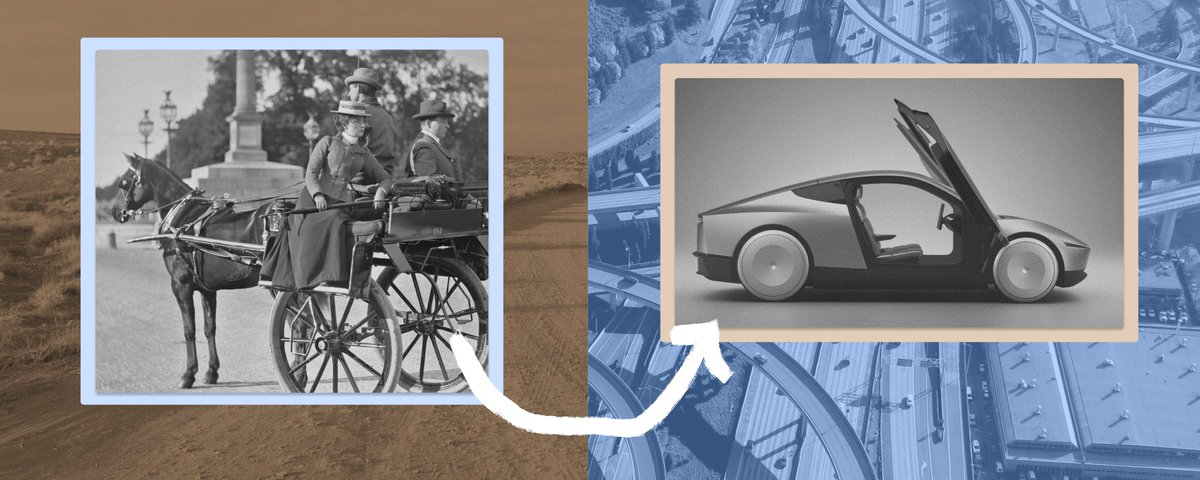
Ethan Mollick shares a working paper that argues AI creates an "inflection point" for each job type, fundamentally altering freelancer economics. Before this inflection point, AI acts as a productivity booster — for example, web developers saw a +65% increase in earnings by leveraging AI tools. However, once AI capability crosses the threshold for a given job, it begins replacing freelancers rather than augmenting them, as seen with translators who experienced a -30% drop in earnings.
A key takeaway from the research is that this replacement effect appears to be irreversible — once AI starts substituting for a particular job type, the trend does not reverse. This suggests a critical strategic implication for freelancers and workers: the window to benefit from AI as a complement to human work is finite, and timing matters enormously in determining whether AI becomes an ally or a competitor.
Nathaniel Whittemore poses the question of how AI will transform consulting and professional services. He pushes back against the simplistic narrative that LLMs and AI agents will straightforwardly displace consultants and professional services firms. Instead, he argues the reality will be more nuanced than direct replacement, suggesting a more complex interplay between AI capabilities and the value that human consultants provide. The post appears to continue with a longer thread or linked content exploring this nuance further.
This opinion paper from researchers at Bern University of Applied Sciences argues that the technology singularity myth is distorting the research agenda in AI and robotics, leading to an overemphasis on human replacement rather than human augmentation. The authors contend that artificial general intelligence (AGI) remains in its infancy, and that robots and narrow AI will never be fully autonomous because human-defined intentions are always required. They highlight how studies predicting massive job losses from automation often overestimate the threat by analyzing individual tasks rather than complex jobs in their entirety, and note that empirical evidence from 1995–2015 shows automation had a positive impact on employment in European manufacturing.
The paper introduces a taxonomy of conjoined agency between humans and machines, distinguishing between interactions that empower workers and those that mechanize them. When humans retain agency over action selection, technology serves as a tool for empowerment; when that agency shifts to the machine, workers risk becoming mechanized — reduced to serving the technology rather than being enhanced by it. The authors advocate for an augmented intelligence approach, where AI supports human decision-making rather than replacing it, while cautioning about challenges like algorithmic discrimination, lack of explainability, and power asymmetries in AI-based worker management systems.
The paper concludes by calling for a shift from technocentric to anthropocentric manufacturing approaches, where collaborative robotics and AI are deployed as tools to enhance worker capabilities, prevent errors, and boost productivity. Drawing on manufacturing philosophies like Kaizen and Agile, the authors stress that the greatest performance gains come from leveraging human-machine complementarity — combining human flexibility with machine efficiency — rather than pursuing full automation.

This article from SQORUS, a digital transformation consulting firm, explores how the labor market is evolving as employees, consultants, freelancers, and AI agents increasingly collaborate within the same organizations. Drawing on a conversation with Frédéric Brousse, Managing Director of Enterprise EMEA at Malt, and data from Malt's Tech Trends 2026 study, the piece highlights that freelancing has matured well beyond a stopgap solution — 94% of European freelancers previously held permanent positions, and large corporations are now structuring formal relationships with independent talent.
The article identifies a critical shift: companies no longer prioritize the type of service provider but rather the ability to solve problems by combining business, technological, and organizational expertise. The rise of "super-connector" profiles — professionals who blend domain knowledge (marketing, finance, HR) with automation and AI skills — reflects this trend. Expertise alone is losing its standalone value; what matters increasingly is the ability to bridge disciplines.
Looking toward 2027, three key expectations emerge: mastering AI within one's own field, the ability to coordinate multiple areas of expertise (evidenced by rising demand for part-time CTO/CDO roles), and a sharp focus on impact and operationalization rather than prototypes and demos. AI has become the second most in-demand skill on Malt's platform, with AI agent-related postings growing 60-fold since 2024. The article concludes that the central question for companies is shifting from "who will do this task?" to "what combination of human and technological expertise will drive this transformation?"

Microsoft's 2026 Work Trend Index report, drawing on trillions of anonymized Microsoft 365 productivity signals and a survey of 20,000 AI-using workers across 10 countries, argues that AI and agents are fundamentally expanding human agency at work — but most organizations aren't built to capture the value. The report introduces the concept of a "Transformation Paradox": employees are ready to reinvent how they work with AI, but organizational metrics, incentives, and norms continue to reinforce legacy ways of working. Only 19% of AI users occupy the "Frontier" zone where both individual capability and organizational readiness are high, while the largest share sits in an "emergent" middle ground of misalignment.
The research identifies Frontier Professionals — 16% of AI users who deploy agents for multi-step workflows, routinely redesign processes, and build shared AI standards — as disproportionately valuable. These users prioritize critical thinking and human judgment, intentionally doing some work without AI to keep skills sharp. Crucially, the report finds that organizational factors like culture, manager support, and talent practices account for more than 2x the reported AI impact of individual effort alone, underscoring that the biggest lever for AI value isn't hiring better people but creating the right environment.
The report calls on organizations to become "Learning Systems" — firms that capture signals from agent-driven work and encode them into shared routines, building what Microsoft calls "Owned Intelligence" that compounds over time. It outlines coordinated roles for employees, leaders, IT, and security in building an evaluation infrastructure for agent operations at scale. Manager behavior proves especially impactful: when managers actively model AI use, employees report a 17-point lift in AI value, a 22-point lift in critical thinking, and a 30-point lift in trust in agentic AI.
Bernard Marr argues that AI will not replace humans but rather serve as a powerful tool for augmentation. He points to several fundamental limitations of AI: it cannot truly understand or experience emotional intelligence, it lacks the ability to conceive genuinely novel ideas, and it cannot make ethical or value-based judgments. While AI excels at processing data and identifying patterns, the human brain's ability to read context, make intuitive leaps, and understand nuanced societal needs remains unmatched.
Rather than framing the AI revolution as a zero-sum competition, Marr advocates for a human-AI partnership model. As AI automates routine and repetitive tasks, humans are freed to focus on higher-value work — strategic thinking, relationship building, and creative problem-solving. He contends that success in this new era belongs to those who develop distinctly human skills that complement AI, and that our humanity — our ability to connect, create, and care — becomes more valuable, not less, as technology advances.

Fathom shares its latest report mapping six narratives that shape the debate around AI's impact on work. The organization frames the discussion around two core questions: how disruptive AI will be and whether the transition requires intervention. The report aims to help readers identify where they fall within this landscape of competing perspectives.
The post serves as a teaser for a more detailed report linked separately, positioning Fathom as a think tank or research organization analyzing the discourse around AI and labor. By distilling the debate into a structured framework of six narratives, the report appears designed to bring clarity to an increasingly polarized conversation about AI-driven workforce transformation.
Microsoft's 2025 Work Trend Index introduces the concept of the Frontier Firm — a new organizational model built around on-demand AI intelligence and hybrid human-agent teams. Drawing on survey data from 31,000 workers across 31 countries, LinkedIn labor trends, and Microsoft 365 telemetry, the report argues that intelligence is becoming an abundant, affordable resource that fundamentally rewires how businesses operate. A critical capacity gap emerges from the data: 53% of leaders say productivity must increase, yet 80% of the global workforce reports lacking sufficient time or energy. Employees face 275 interruptions per day during work hours, and after-hours work continues to climb. AI agents are positioned as the solution, with 82% of leaders expressing confidence they'll use digital labor to expand workforce capacity within 12–18 months.
The report outlines three phases in the journey to a Frontier Firm: AI as assistant, agents as digital colleagues on teams, and agents running entire business processes with human oversight. A key concept is the Work Chart — replacing traditional org charts with dynamic, outcome-driven teams powered by agents. The report also introduces the idea of the agent boss: every employee managing AI agents as part of their role, from entry-level workers to executives. Leaders currently outpace employees in agent readiness across all seven indicators measured, creating a gap that organizations must close through training and cultural change.
Among the 844 Frontier Firm leaders identified in the survey, 71% say their company is thriving compared to just 39% globally, and they report significantly less fear of AI replacing their jobs. Nearly half of all leaders (45%) say expanding team capacity with digital labor is a top priority, while 78% are considering hiring for AI-specific roles. The report emphasizes that AI literacy is the most in-demand skill of 2025 according to LinkedIn, and urges organizations to move beyond pilots to broad-scale AI deployment, set human-agent ratios for different functions, and invest heavily in reskilling their workforce.
Dr. DVD shares a New York Times article titled "The Small-Business Owners Managing Whole Armies of A.I. Employees." The piece explores how small-business owners are increasingly deploying multiple AI agents to handle tasks traditionally performed by human employees, effectively building automated workforces. The shared link points to a growing trend where entrepreneurs leverage AI tools at scale to run operations, raising questions about the future of work, productivity, and the evolving role of AI in everyday business management.
The Stanford Digital Economy Lab, directed by Erik Brynjolfsson, investigates how AI is reshaping work, productivity, and economic inequality. The Lab's research agenda stems from two urgent challenges Brynjolfsson identified in his 2019 testimony before the U.S. Congress: stagnant productivity growth and rising inequality. His policy recommendations span reinventing education, rebalancing capital and labor, investing in technology leadership, welcoming high-skill immigrants, and supporting entrepreneurship.
Since then, AI development has accelerated dramatically, and the Lab has produced influential research including "Generative AI at Work" (Brynjolfsson, Li, and Raymond 2025), one of the first major studies to measure generative AI's real-world impact on workplace productivity at scale. The page highlights several key publications covering topics such as the automation and augmentation potential of AI agents across the U.S. workforce, the risks of the "Turing Trap" in pursuing human-like AI, and the broader impact of AI on labor markets and SMEs.
With trillions of dollars now invested in AI as of 2026, the Lab emphasizes that productivity gains must follow. Brynjolfsson frames productivity as the fundamental determinant of national wealth and individual living standards, noting that technology alone is insufficient — complementary innovations in business practices, institutions, and policy are essential to realizing AI's full economic potential.

Microsoft Research's New Future of Work Report 2025 examines how generative AI is reshaping workplaces at a pace exceeding previous technological shifts. Rather than simply automating tasks, AI is now actively participating in workflows — changing how people create, decide, collaborate, and learn. The report draws on large-scale data analyses, field studies, and theoretical frameworks to assess adoption patterns, productivity impacts, and labor market effects across industries and geographies.
A key finding is that AI's benefits are unevenly distributed. Adoption varies significantly by gender, income level, region, and organizational culture. High-income countries lead usage, but growth is fastest in low- and middle-income regions, where gaps in multilingual model support risk reinforcing existing inequalities. Entry-level workers face particular vulnerability, with empirical evidence showing a 16% employment decline for workers aged 22–25 in highly AI-exposed roles relative to less-exposed ones, raising concerns about how future expertise will be built if learning-intensive jobs are automated away.
The report emphasizes that human expertise matters more, not less, in an AI-powered world. Workers are shifting from doing tasks to guiding, critiquing, and refining AI outputs — requiring new skills like prompt crafting, quality oversight, and calibrated trust. Current AI systems, designed primarily for individuals rather than teams, often underperform in group settings, though emerging research into team-oriented AI and collective intelligence shows significant promise. The authors stress that the future of work is not predetermined but will be shaped by intentional choices in system design, organizational adoption, and workforce development.

Aaron Levie, CEO of Box, shares a thought-provoking observation about the future of AI agents in the workplace. He argues that when companies deploy 100x more AI agents than human workers, the dynamic will flip — humans will adapt to how agents work best, rather than the other way around.
Levie emphasizes that AI agents fundamentally thrive on context, and the quality of their output is heavily dependent on how well that context is provided. The post (which appears truncated) suggests that the variance in agent performance is closely tied to how work environments and processes are structured around them, implying a significant shift in organizational design and workflows ahead.
This Brookings commentary by scholars from Brown University, Case Western Reserve University, and the Brookings Institution argues that the debate around AI and jobs too often focuses narrowly on whether AI will destroy or create employment, while ignoring the steady degradation of job quality already underway. The authors contend that work has been progressively "enshittified" through increased surveillance, algorithmic scheduling, declining autonomy, and stagnant wages — trends that predate modern AI but risk being accelerated by it. Even Silicon Valley, once a bastion of worker autonomy, is pushing employees harder with fewer protections.
The piece outlines three core people-first policy proposals: protecting and expanding human roles in care professions like teaching and nursing through minimum staffing requirements; developing robust training institutions to support mid-career transitions (such as displaced software engineers moving into education); and creating tripartite institutions that bring government, business, and labor together to co-design AI systems rather than imposing them from above. The authors point to concrete examples, including a Carnegie Mellon–UNITE HERE collaboration on hotel worker software, as evidence that participatory AI design can produce mutual gains.
Ultimately, the authors argue that the AI revolution presents both a threat and an opportunity. Rather than accepting a future where AI enriches tech billionaires while hollowing out the workforce, policymakers should seize this moment to reinvest AI-generated wealth into human-centered professions, revitalize institutions like the NLRB, and build new lifelong learning systems modeled on successful European approaches.

Winston Marshall shares a striking prediction that AI will eliminate 50% of entry-level white-collar jobs within a one-to-five-year timeframe. He frames the claim with the ominous phrase "there may be trouble ahead," signaling concern about the looming economic and social disruption this wave of automation could bring.
The post highlights growing anxiety around AI's impact on the job market, particularly for younger professionals and recent graduates who rely on entry-level positions as career starting points. If such predictions prove accurate, the implications for workforce planning, education, and economic policy would be profound.
Daniel Miessler argues that AI will inevitably replace most knowledge work — not because AI is extraordinary, but because the current state of corporate work is deeply dysfunctional. Drawing on 25+ years of consulting across hundreds of Fortune 10,000 companies, he describes a landscape of unclear vision, inconsistent processes, undocumented institutional knowledge, empire-building politics, and blind leadership that can't even see what their organizations are doing. He frames this chaos as what AI is actually competing against, noting that $50+ trillion is spent annually on knowledge workers where only 21% are engaged and the majority are doing the minimum or actively disengaged.
Miessler dismantles the "human reliability myth" by drawing parallels between LLMs and human cognition — arguing that humans don't know where their thoughts come from, can't predict how they'll finish sentences, and have deeply flawed memory systems. He introduces a capability stack (knowledge, understanding, intelligence, creativity) and contends that AI already matches or exceeds humans on the first three layers, which constitute the vast majority of knowledge work. The real gap, he argues, is an "articulation gap" — expertise trapped in human heads that hasn't been documented into AI-executable skills and SOPs. This gap is closing through a one-way "expertise ratchet" where captured knowledge permanently enters the collective AI pool.
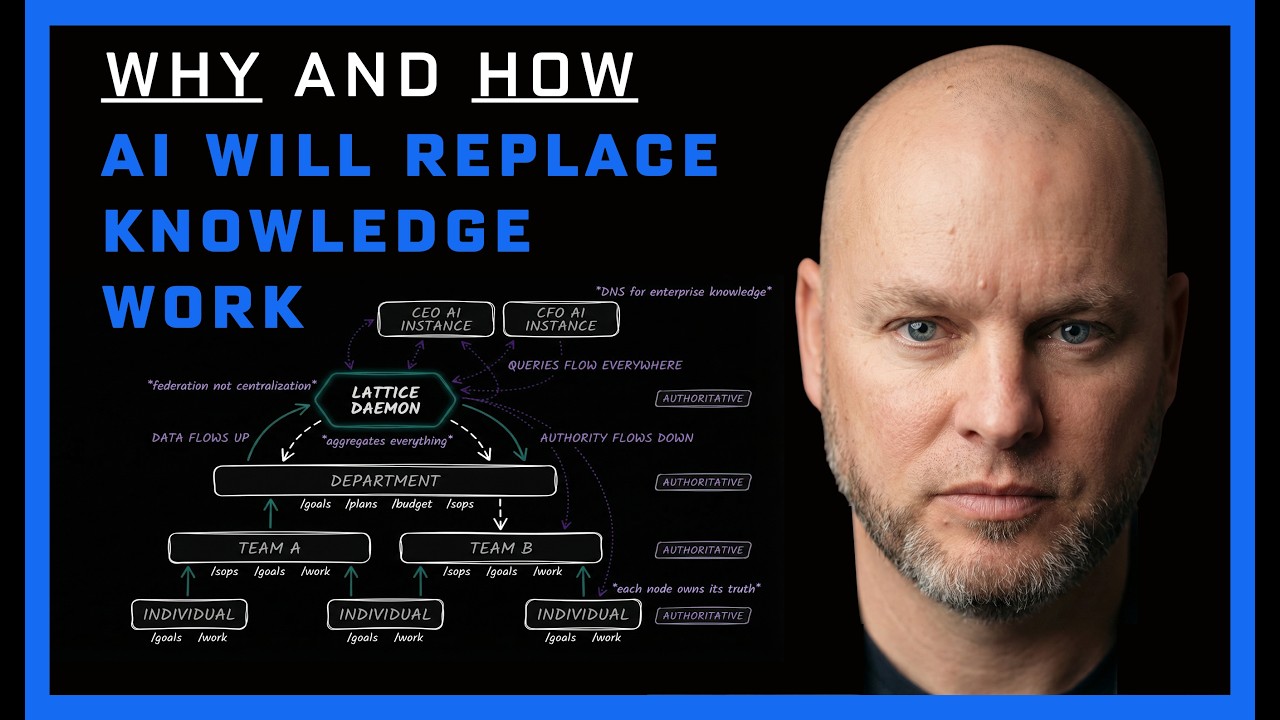
He proposes an architecture called the Lattice — an open-source system where every individual, team, department, and company broadcasts its goals, SOPs, metrics, and work items via APIs, giving leaders real-time visibility into operations. In this model, humans shift from being doers to overseers, leveraging what AI fundamentally lacks: subjective experience and desire. Miessler frames this transition as "Human 3.0" — moving from survival to corporate drudgery to creative self-expression — arguing that the loss of knowledge work jobs is ultimately liberation from a system everyone already knew was broken.