Ahmad shares a self-study roadmap for deep learning broken into 5 phases, outlining hands-on milestones that learners should aim to hit. These include building an autograd engine from scratch, writing a mini-GPT from scratch, implementing LoRA and fine-tuning a model on real data, and — humorously — hating CUDA at least once and crying along the way. The advice is practical and self-paced: skip what you already know, rewatch what confuses you, and keep going when stuck. The post captures the gritty, iterative nature of learning ML engineering with a relatable, no-nonsense tone.
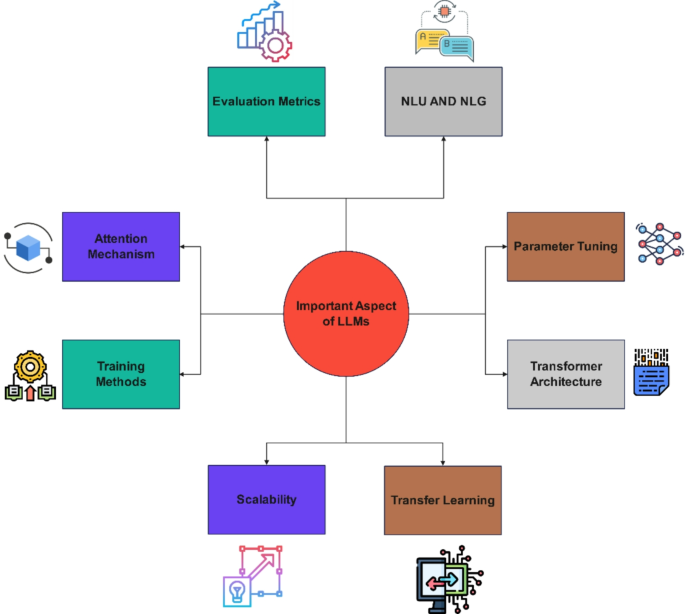
This Scientific Reports paper provides a comprehensive review of large language models (LLMs) and their applications across major industries. The authors trace the evolution of LLMs from early statistical language models and RNNs through the introduction of transformer architectures, which enabled breakthroughs like BERT, GPT, and LLaMA. The review covers key technical aspects including attention mechanisms, training methods, and evaluation metrics, providing a foundation for understanding how these models function at scale.
The study examines LLM applications across five major industries: healthcare and medicine (disease diagnosis, treatment planning, patient data management), automotive (predictive maintenance, autonomous driving), e-commerce (recommendation systems, consumer behavior analysis), education (personalized learning, automated grading), and finance and banking (fraud detection, risk management, customer service automation). The authors distinguish their work from prior reviews by covering multiple industries simultaneously rather than focusing on just one or two domains.
Despite the transformative potential, the paper highlights significant challenges including ethical concerns, biases in training data, data security and privacy issues, and substantial computational resource requirements. The authors argue these must be addressed for responsible and sustainable deployment. The review synthesizes over 100 research articles from 2020–2024, offering researchers a consolidated view of the current state and future directions of industrial LLM adoption.