ScienceDaily's Artificial Intelligence News page aggregates dozens of recent headlines spanning AI breakthroughs, quantum computing advances, and robotics developments from late 2025 through mid-2026. Top stories include an AI-powered framework for measuring cosmic expansion using supernovae, proposals for AI data centers in space, a brain-inspired chip operating near absolute zero for quantum computing, and research exposing fundamental weaknesses in large language models through classic psychology tests. The page also highlights a hybrid light-matter particle from Penn that could dramatically reduce AI energy consumption and NASA's testing of a radiation-hardened chip enabling autonomous spacecraft decision-making.
Beyond the headliners, the collection covers a wide spectrum of AI-adjacent topics: artificial neurons communicating with living brain cells, quantum AI predicting chaotic systems, DNA robots for drug delivery, AI-powered medical diagnostics reading brain MRIs in seconds, and philosophical questions about machine consciousness. Quantum computing features prominently, with stories on real-time qubit monitoring, million-qubit scaling via optical cavities, and fault-tolerant quantum error correction. Societal implications also receive attention, including warnings about AI swarms manipulating democracy, ethical risks of ChatGPT as a therapist, and the potential displacement of half of today's jobs. The page serves as a comprehensive snapshot of the rapidly evolving AI and quantum computing landscape, organized chronologically with both summaries and linked full articles.

Researchers at Swansea University have conducted one of the largest studies to date on human-AI creative collaboration, involving over 800 participants designing virtual cars. The study found that when participants were shown AI-generated design galleries — created using a method called MAP-Elites — they spent more time on tasks, produced better designs, and felt more creatively engaged. Crucially, the galleries included a wide spectrum of ideas, from highly effective to intentionally flawed, which helped participants break free from initial assumptions and explore broader possibilities.
The research, published in ACM Transactions on Interactive Intelligent Systems, also challenges how AI design tools are typically evaluated. Standard metrics tend to focus on surface-level behaviors like click rates and copying frequency, but the Swansea team argues these miss the deeper cognitive and emotional effects AI has on users. Lead author Dr. Sean Walton emphasized that diversity in AI output — including imperfect ideas — was key to preventing early fixation and encouraging creative risk-taking. As AI becomes embedded in fields from architecture to game design, the study suggests the real question isn't what AI can do alone, but how it can enhance human thinking and collaboration.
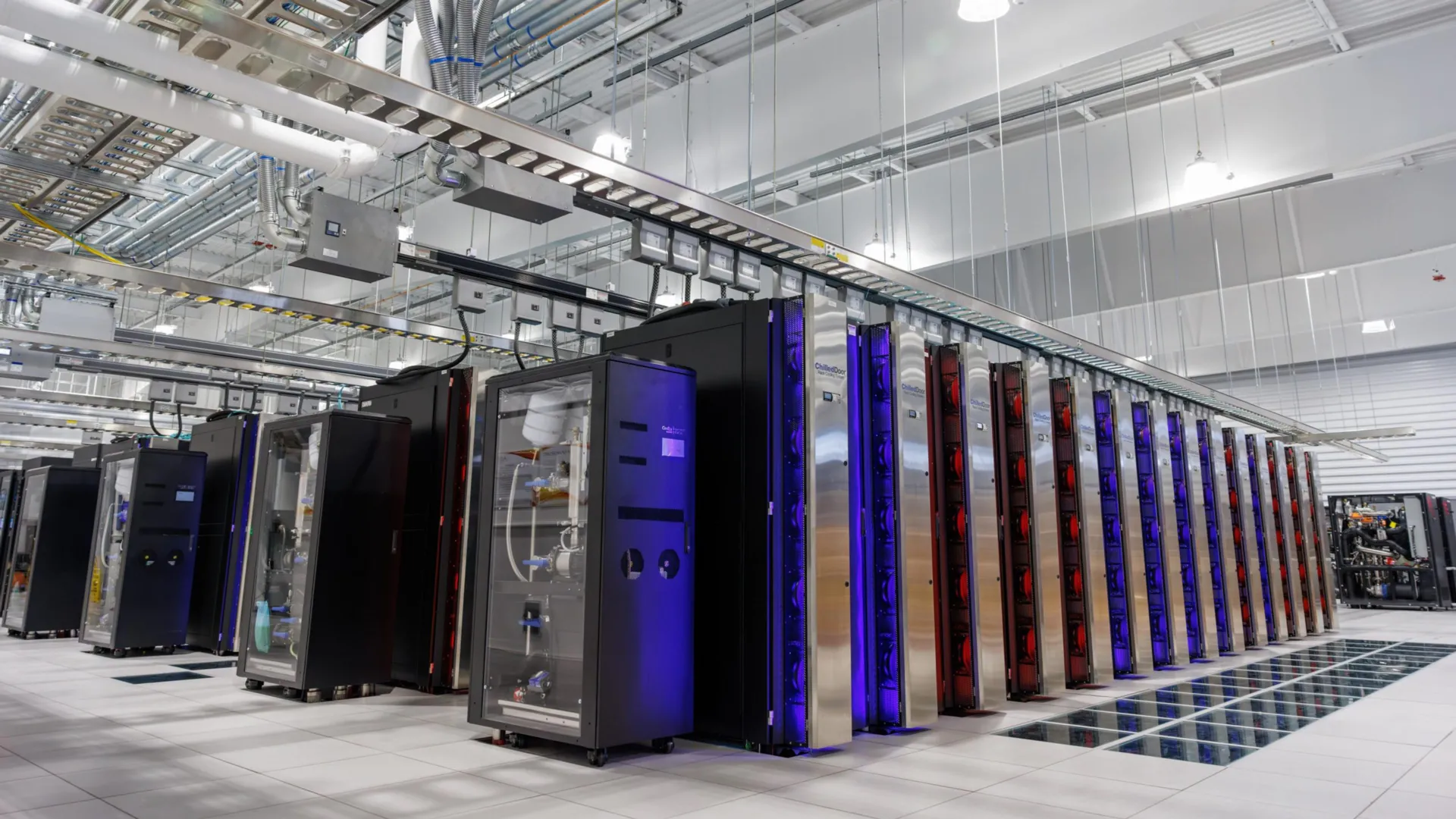
Researchers at Tufts University, led by professor Matthias Scheutz, have developed a neuro-symbolic AI system that combines traditional neural networks with human-like symbolic reasoning, achieving up to 100x reduction in energy consumption while significantly improving accuracy. The approach targets visual-language-action (VLA) models used in robotics, where conventional systems rely on brute-force trial and error and consume enormous amounts of electricity — AI and data centers already account for over 10% of U.S. electricity production.
In tests using the Tower of Hanoi puzzle, the neuro-symbolic system achieved a 95% success rate compared to just 34% for standard models, and on unfamiliar complex variations it still succeeded 78% of the time while traditional models failed entirely. Training time dropped from over a day and a half to just 34 minutes, and training energy was reduced to just 1% of conventional requirements. During operation, the system used only 5% of the energy needed by standard approaches.
The research, set to be presented at the International Conference of Robotics and Automation in Vienna, suggests that current LLM and VLA-based approaches may not be sustainable long-term. By incorporating structured reasoning and rule-based logic rather than relying solely on statistical pattern matching, neuro-symbolic AI offers a potentially more efficient, accurate, and sustainable foundation for future AI systems — addressing growing concerns about AI's strain on power infrastructure as data center energy demands are projected to double by 2030.